


Purpose
To build adaptability, spontaneous thinking, and physical storytelling skills through playful improvisation. This activity trains delegates to listen closely, respond creatively and transition roles smoothly under shifting constraints. This exercise is ideal for acting courses, improvisation, listening skills, adaptability, team collaboration, body language and physical expression. This exercise is highly engaging and physically active, which makes it ideal as a warm-up or energiser during soft skills or creativity training.
Objective
Delegates take turns stepping into a live scene, asking what is happening and immediately switching into a completely new improvised activity based on the response.
What You Need
- Open space where a circle can be formed and the central area to be use for acting
Setup
- Form a circle with all delegates standing. If there are more, break into subgroups. If there is an odd number and one person is left out, the trainer can participate to ensure everyone gets a turn.
- Ask the group to collectively choose a starting scene to base the initial setup on. Example prompts include:
“Building a film set”
“Setting up a campsite”
“Running a kitchen during a busy dinner service”
“Preparing for a space launch”
- Ask for a volunteer to step into the centre.
- Explain how the scenes work:
- The volunteer begins by performing silent object work. miming a realistic action that fits the chosen scene. Encourage detailed, believable movement. Example: sawing wood, painting a backdrop, plugging in studio lights.
- After 30 seconds, the next delegate in the circle (to the left of the starting person) steps in and asks, “Hey, [Name], what are you doing?”
- The person currently acting responds with a completely unrelated activity. For example, they say, “I’m firing a machine gun at the enemy!” This should not be what they are miming, but something imaginative and contrasting.
- The new person says, “OK, let me help you with that,” and joins the imaginary scene, miming support for the new action. For example, holding the dangling magazine, ducking for cover and protecting the flank. The second person should gradually take over. This part can take another 30 seconds.
- The first player steps out, and the scene continues with the new player alone for a few moments, continuing with the act.
- The next person in the circle enters the scene, asks the same question, “Hey, [Name], what are you doing?” and receives a new answer, again, not what has being acted out.
- The sequence then continues.
- Ask if everyone is happy with the instructions and if they have any questions before they start. You don’t really want to stop the flow to explain what they need to do once the sequence starts.
- Optionally you can declare a genre rule. For example, all scenes must take place in a spy thriller or historical drama. Make sure everyone has understood this and is happy with it. Misunderstandings can make the acting sequence messy.
- When ready get the volunteer to start the acting.
- Repeat the relay until all delegates have entered the scene. Encourage energy, focus and commitment to each new action.
- Praise everyone in the end and follow with a discussion on acting performances.
Timing
Explaining the Exercise: 5 minutes
Activity: 8 minutes for 8 delegates
Group Feedback: 10 minutes
Discussion
- How did it feel to shift suddenly from one scene to another?
- Could you easily read the acting and understand what was happening?
- How did it feel to quickly react to the other person’s imaginary reinterpretation of the scene?
- How does this kind of spontaneous thinking help with acting and public performance?
Ready-to-Use Soft Skills Training Materials
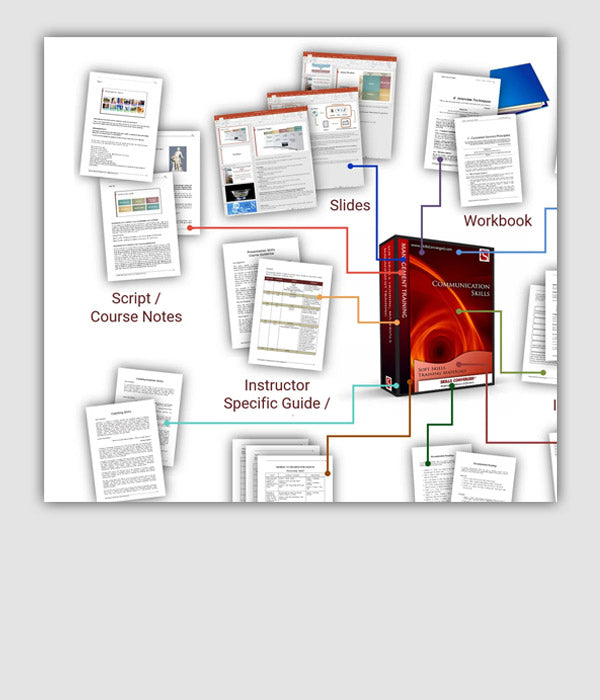
Editable slides, trainer notes, workbooks and exercises. Download, customise and reuse.
Why Choose Our Training Materials?

Online Train the Trainer Course:
Core Skills
CPD Accredited
Turn Your Expertise into Engaging, Well-Structured Training
Topics
Need a Complete Soft Skills Course to Deliver?
Save preparation time with ready-to-use course packs containing editable slides, detailed trainer notes, participant workbooks and engaging exercises.
Management ◆ Interpersonal Development ◆ Personal Development
The Most Similar Exercises & Articles to This in Order of Similarity Are:





Resources for Trainers and Course Designers
Instructional Design Books
Practical books on course design, learner engagement and training delivery, available in paperback and ebook

Free Training Resources
Download a complete sample course with training activities, assessment forms and practical resources for trainers.

Comprehensive Body Language Guide
Explore body language, gestures, posture, facial expressions and non-verbal communication in one practical guide.

Train the Trainer Resources
Improve course design and delivery with practical guides, specialist books and Train the Trainer courses.
Leave a comment
All comments are moderated before being published.
This site is protected by hCaptcha and the hCaptcha Privacy Policy and Terms of Service apply.