



Purpose
This interactive relay exercise helps delegates recognise, express and interpret emotions, both primary and complex. It develops emotional intelligence by improving awareness of subtle facial expressions, tone and body language. You can use it as a warmup exercise for acting.
Objective
Delegates stand in a circle and take turns expressing emotions verbally and non-verbally in a relay format. The goal is to accurately interpret the expressed emotion and respond appropriately before passing it on. The activity builds emotional awareness, expression and recognition skills in a playful, team-based setting.
What You Need
- Whiteboard or flip chart
- Marker pens
- Pre-written lists of primary emotions and complex emotions
- Open space for delegates to stand in a circle
Setup
- Have delegates stand in a circle where they can all see each other.
- Write the six primary emotions clearly on the whiteboard:
Happiness - Sadness - Fear - Anger - Surprise - Disgust
- Explain that they will begin with these six and later move to more complex emotions.
- Demonstrate one quick example yourself to show how tone, facial expression and body language can change the interpretation of a line.
Round 1 – Primary Emotions (5 minutes)
- Get one delegate to start by pointing to another person, saying their name, and expressing an emotion through both voice and expression while saying: “He is here” or “She is here”.
Example
“Sarah, he is here.” [Said with an angry face and sharp tone]
- The named delegate must mirror the emotion, repeating the same line in their own way to show they recognised the emotion.
- The original delegate confirms if they got the emotion right.
- Then the named delegate chooses another person, expresses a new emotion, and the relay continues around the circle. They can look up the whiteboard in case they need to see what other emotion they can express.
Round 2 – Complex Emotions (5 minutes)
- Once everyone is comfortable, introduce the complex emotions on the whiteboard, such as: contempt, envy, jealousy, grief, anxiety, awe, boredom, nostalgia, embarrassment, shame, pride, gratitude, admiration, schadenfreude.
- Repeat the same relay format, this time using these nuanced emotions.
- Encourage subtle and realistic expression rather than exaggerated acting.
- Follow with a discussion on emotional expression.
Timing
Explaining the Exercise: 2 minutes
Activity: 10 minutes for two rounds
Group Feedback: 10 minutes
Discussion
After completing the rounds, invite delegates to reflect on their experience:
- Which emotions were easiest to express?
- Which were most difficult to convey or interpret?
- Were there emotions that were easy to act but hard to recognise in others?
- How did tone and body language influence your interpretation?
- How does this exercise relate to emotional expression and understanding in real conversations at work?
Variations
Consider the following optional rules:
- No Repeats. Once the group gets used to the exercise, introduce a rule: no emotion can be repeated during the round. This makes it progressively harder and forces delegates to think creatively and recall emotions.
-
Variety of phrases. To vary the emotional context, delegates can express with different phrases such as:
- “He is gone.”
- “She has arrived.”
- “It is destroyed.”
- “She lied.”
-
Direct phrase. Delegates express themselves with “You are here.”
- Only use this variation when delegates know each other and feel psychologically safe to be subjected to this. Disgust, anger or contempt may feel intense in direct communication. Use this variation to practise acting.
- No phrase. Remove the spoken line. Delegates must guess the emotion purely through expression.
Ready-to-Use Soft Skills Training Materials
Editable slides, trainer notes, workbooks and exercises. Download, customise and reuse.
Why Choose Our Training Materials?

Online Train the Trainer Course:
Core Skills
CPD Accredited
Turn Your Expertise into Engaging, Well-Structured Training
Topics
Need a Complete Soft Skills Course to Deliver?
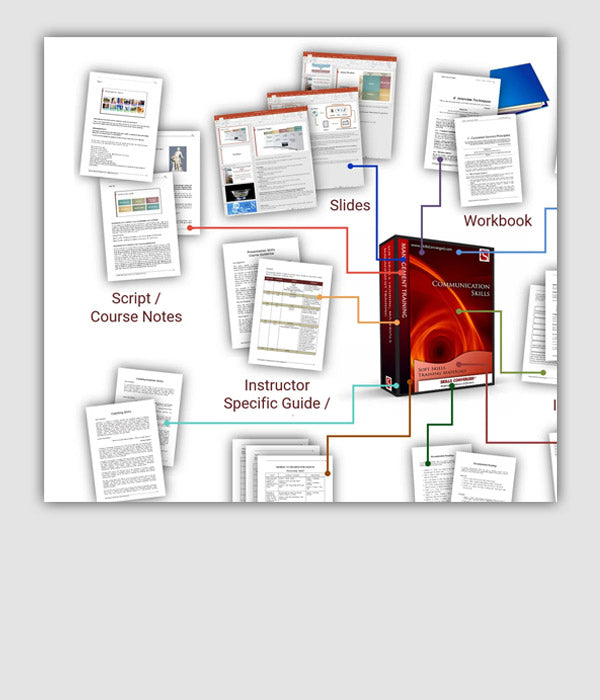
Save preparation time with ready-to-use course packs containing editable slides, detailed trainer notes, participant workbooks and engaging exercises.
Management ◆ Interpersonal Development ◆ Personal Development
The Most Similar Exercises & Articles to This in Order of Similarity Are:






Resources for Trainers and Course Designers
Instructional Design Books
Practical books on course design, learner engagement and training delivery, available in paperback and ebook

Free Training Resources
Download a complete sample course with training activities, assessment forms and practical resources for trainers.

Comprehensive Body Language Guide
Explore body language, gestures, posture, facial expressions and non-verbal communication in one practical guide.

Train the Trainer Resources
Improve course design and delivery with practical guides, specialist books and Train the Trainer courses.
Leave a comment
All comments are moderated before being published.
This site is protected by hCaptcha and the hCaptcha Privacy Policy and Terms of Service apply.