


Purpose
This exercise is useful to sharpen improvisational thinking and emotional reasoning by building mini-scenes. The scenes involve unusual behaviours, their recognition and justification, all in just three lines. Ideal for warmup in acting courses, improvisation, communication, creativity and quick thinking.
Objective
Delegates will work in rotating pairs to improvise ultra-short scenes in three lines: one to introduce an unusual behaviour, one to label it and one to justify it. This develops active listening, emotional logic and scene-building discipline.
What You Need
- A clear space for delegates to work in isolation and to stand and move between pairs
Setup
- Ask delegates to form a circle.
- Divide them into pairs. If there is an odd number, the trainer should step in to partner with one delegate.
- Explain the structure of the three-line scene:
Line 1: One person says something unexpected, odd or extreme.
Line 2: The second person questions or labels that behaviour.
Line 3: The first person gives a logical or emotional justification.
- Remind delegates of the key improvisation principles: agree, build on the moment, make statements and stay present.
- Give each pair about one minute to act out their three-line scenes.
- Encourage quick thinking and natural delivery.
- Watch for delegates who get stuck in over-explaining or resisting the scene. Remind them that commitment sells the scene. The goal is not realism; it is plausibility within the moment.
- After each scene, rotate one person from every pair to the pair on their left, creating new partnerships.
- Run three rounds in total, each time with new pairings.
- After the third round, ask a few pairs to volunteer and perform one of their favourite scenes to the whole group.
- Follow with a quick debrief.
Examples for Inspiration
Example 1
Person A: “I rechecked everyone’s work before the presentation.”
Person B: “You double-checked your whole team, don’t you trust them?”
Person A: “I do, but the client once pulled out over a typo and I couldn’t let that happen again.”
Example 2
Person A: “I brought a fog machine to the staff meeting.”
Person B: “You turned strategy into a rock concert?”
Person A: “Every great vision needs a little atmosphere.”
Example 3
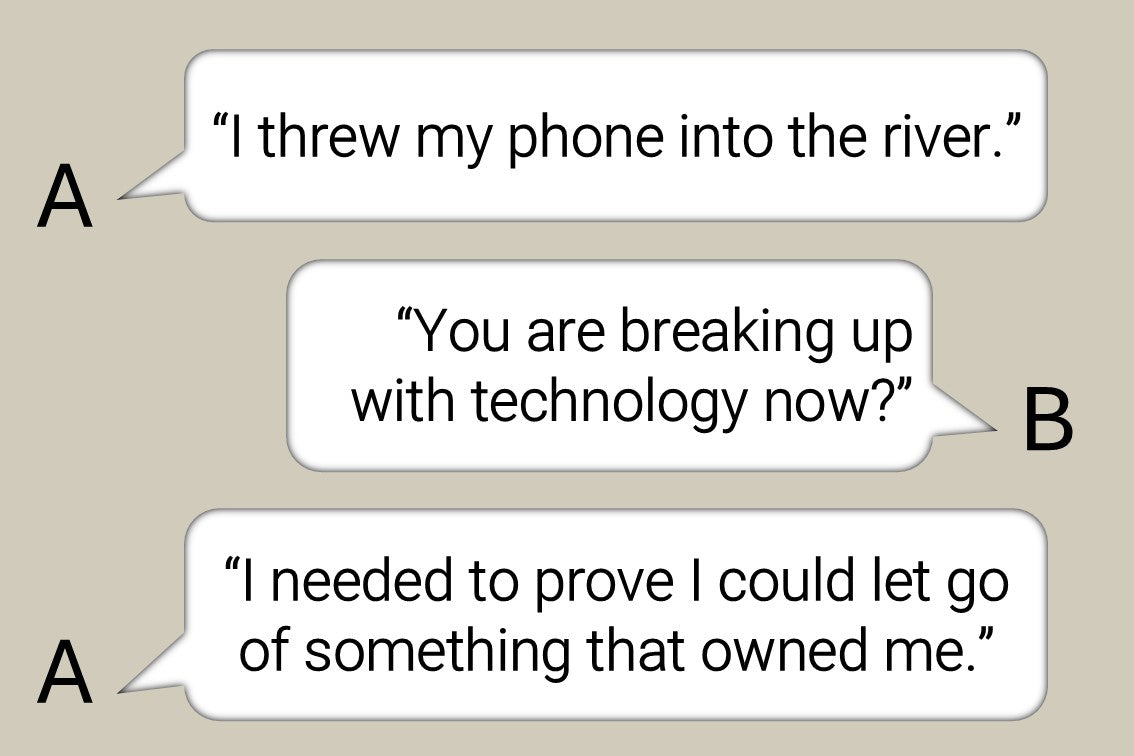
Person A: “I threw my phone into the river.”
Person B: “You are breaking up with technology now?”
Person A: “I needed to prove I could let go of something that owned me.”
Timing
Explaining the Exercise: 2 minutes
Activity: 3 min Pair Acting + 2 min Acting in front of Class = 5 minutes
Group Feedback: 3 minutes
Discussion
- How did your scene partner help shape your idea into something more?
- How did it feel to justify an unusual behaviour on the spot?
- Which justifications felt emotionally true or funny?
- Which scenes surprised you the most?
Ready-to-Use Soft Skills Training Materials
Editable slides, trainer notes, workbooks and exercises. Download, customise and reuse.
Why Choose Our Training Materials?

Online Train the Trainer Course:
Core Skills
CPD Accredited
Turn Your Expertise into Engaging, Well-Structured Training
Topics
Need a Complete Soft Skills Course to Deliver?
Save preparation time with ready-to-use course packs containing editable slides, detailed trainer notes, participant workbooks and engaging exercises.
Management ◆ Interpersonal Development ◆ Personal Development
The Most Similar Exercises & Articles to This in Order of Similarity Are:






Resources for Trainers and Course Designers
Instructional Design Books
Practical books on course design, learner engagement and training delivery, available in paperback and ebook

Free Training Resources
Download a complete sample course with training activities, assessment forms and practical resources for trainers.

Comprehensive Body Language Guide
Explore body language, gestures, posture, facial expressions and non-verbal communication in one practical guide.

Train the Trainer Resources
Improve course design and delivery with practical guides, specialist books and Train the Trainer courses.
Leave a comment
All comments are moderated before being published.
This site is protected by hCaptcha and the hCaptcha Privacy Policy and Terms of Service apply.