



Purpose
This imaginative group activity develops critical thinking, problem-solving and collaboration by challenging delegates to reverse-engineer a complex real-world scenario from abstract, unrelated cues. Scenario Architects helps delegates embrace ambiguity, stretch their creative muscles and collaborate under open-ended conditions. This is an essential skill in today’s fast-moving and unpredictable professional environments. It also provides a fresh, playful way to practise systems thinking, narrative reasoning and innovative problem-solving. The exercise encourages lateral thinking, creativity and the ability to connect ideas in unconventional but meaningful ways.
Objective
Delegates work in small teams to construct a coherent and impactful real-world problem using a random set of abstract elements. Once they have designed their problem scenario, they then propose a creative, actionable solution, making sense of the surreal.
What You Need
- Prepared sets of Problem Blueprint Cards, each containing 4–5 abstract elements (see examples below)
- Flipchart paper or whiteboards for planning
- Markers
Setup
- Divide the class into teams of 3 to 4 delegates.
- Hand each team a Problem Blueprint Card. This contains a random combination of unrelated elements such as objects, sounds, settings or concepts.
- Instruct each team to do the following:
- Create a realistic problem scenario that uses every element on the card in a meaningful way. It can be from business, community, tech, education, climate, etc.
- Design a plausible, creative solution to the scenario they have invented.
- Be prepared to pitch both the problem and the solution clearly to the group.
- Clarify the goal: the more cohesive, real-world relevant and creative the story and solution, the better. Encourage originality but require logic and coherence.
- Allocate 20 minutes for them to create a realistic problem, design a solution and prepare a presentation.
- Gather everyone and get each team to present to the class.
- Get other teams to provide feedback on creativity, decision making, analysis and presentation.
- Follow with a discussion.
Problem Blueprint Cards
- A broken teacup, a flock of migrating birds, a single red string, the sound of a distant train
- A leaking roof, a forgotten birthday, a dying tree, an old film camera
- A whisper in a library, an unpaid invoice, neon lights, a cracked smartphone screen
- A closed-down cinema, a handwritten map, bees, an empty fuel tank
- A locked briefcase, falling snow, a power outage, a pair of muddy boots
- A runaway goat, static on a radio, the smell of fresh paint, a blank billboard
- A traffic jam, a cold cup of coffee, a ripped banner, a singing child
- A lost dog, a broken elevator, an overheard confession, a glow-in-the-dark sticker
- A half-finished crossword, a torn concert ticket, a silent protest, an antique mirror
- A busker playing violin, a waterlogged notebook, a broken drone, a flickering streetlamp
Example Scenario (Using Problem Blueprint Card 1)
Blueprint Elements:
A broken teacup, a flock of migrating birds, a single red string, the sound of a distant train
Invented Problem:
In a coastal market town, retailers near the railway report unexplained shelf damage. The owner of a café had tied a single red string across a stack of cups as a simple tell-tale. After a 23:42 freight pass, staff found the string snapped and a broken teacup on the floor. At the same time, a flock of migrating birds is seen circling disoriented over the floodlit freight yard. Residents record the sound of a distant train at unusual hours; a temporary night-time freight diversion has introduced low-frequency vibration and glare that coincide with peak migration. With no formal monitoring and fragmented accountability, the town faces wildlife harm, stock losses and rising complaints.
Proposed Solution:
- Deploy a rapid, low-cost monitoring kit: phone-based acoustic logging keyed to the sound of the distant train (as a timestamp), and simple vibration ‘telltales’ made by stretching a single red string across cups/saucers and shelf edges to detect movement during passes.
- Coordinate with rail operators to implement a two-week ‘quiet window’ during peak migrating bird transits, fit temporary rail dampers and switch to downward-shielded, warm-spectrum yard lighting.
- Use collected data to optimise train timings and speeds, publish a mitigation plan with clear KPIs (stock damage incidents, bird behaviour counts, night-time dB levels).
- Support local traders (including the café with the broken teacup) with micro-grants and better shelf isolation mounts while longer-term fixes are installed.
Timing
Explaining the Exercise: 5 minutes
Activity: 20 min design & prep + (10 min presentation & feedback x number of teams) = 50 min for 9 people
Group Feedback: 10 minutes
Discussion
Ask the following questions to spark reflection:
- How did your team make sense of unrelated elements?
- Which element was hardest to include? How did you work it in?
- How did the constraint actually help you be more creative?
- Can you think of real-world situations where problems are this complex or unclear?
- What parallels do you see between this exercise and workplace innovation?
Variations
- Solution Swap: After creating their problems, teams swap their scenarios with another group. They must now come up with a solution to a challenge they didn’t create.
- Theme Constraint: Add a specific sector (e.g. education, sustainability, public health) that the scenario must fit into.
- Add Crisis: Introduce a ‘crisis twist’ halfway through (e.g. a new variable or constraint) that teams must adapt to.
Ready-to-Use Soft Skills Training Materials
Editable slides, trainer notes, workbooks and exercises. Download, customise and reuse.
Why Choose Our Training Materials?

Online Train the Trainer Course:
Core Skills
CPD Accredited
Turn Your Expertise into Engaging, Well-Structured Training
Topics
Need a Complete Soft Skills Course to Deliver?
Save preparation time with ready-to-use course packs containing editable slides, detailed trainer notes, participant workbooks and engaging exercises.
Management ◆ Interpersonal Development ◆ Personal Development
The Most Similar Exercises & Articles to This in Order of Similarity Are:






Resources for Trainers and Course Designers
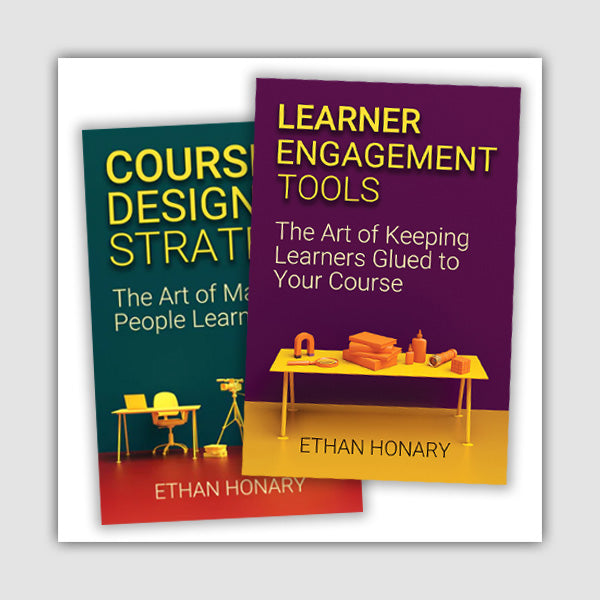
Instructional Design Books
Practical books on course design, learner engagement and training delivery, available in paperback and ebook

Free Training Resources
Download a complete sample course with training activities, assessment forms and practical resources for trainers.

Comprehensive Body Language Guide
Explore body language, gestures, posture, facial expressions and non-verbal communication in one practical guide.

Train the Trainer Resources
Improve course design and delivery with practical guides, specialist books and Train the Trainer courses.
Leave a comment
All comments are moderated before being published.
This site is protected by hCaptcha and the hCaptcha Privacy Policy and Terms of Service apply.