



Purpose
This is a decision making exercise that allows you to choose the best ideas from a set of ideas. Since each idea is considered in detail, this technique is more useful when you can focus enough on each idea. Hence, it is not suitable if you have many ideas to consider or want to use quantitative methods to reduce the number of options available.
It is best to run this exercise for a group of people who are from the same organisation so that everyone can focus on the same problem.
Objective
Identify the pluses, potentials and concerns of each idea to select the best ideas from a set of options available.
What You Need
- Blank cards
- Copies of Evaluation Forms provided below.
Setup
Stage 1:
- Ask the delegates to consider a problem for the purpose of this exercise. It is best if this is a current work-related problem.
- Ask them to use a brainstorming technique to generate a number of ideas as potential solutions.
- Ask delegates to write each unique idea on a blank card.
- Allocate 30 minutes for this part.
Stage 2:
- Ask the delegates to focus on each idea one at a time and consider the following:
- Identify three pluses. Think of three strong points that support this idea.
- Identify three potentials. Think of three possible ways that could improve the idea or solution further. Are there any by-products that the main idea can lead to? Can this idea be combined with other ideas to form a better solution?
- Identify three concerns. What would be your top three main concerns if you follow this solution or idea?
- Ask delegates to record their discussions on an Evaluation Form for each idea.
- Allocate 5 to 10 minutes per idea.
Stage 3:
- Once all ideas are initially covered, each idea can then be explored in more detail.
- Ask delegates to consider the following:
- What are the advantages and disadvantages of each idea?
- What resources are required for each idea?
- How can you get more commitment for a given idea?
- How can you get people to become more enthusiastic about a given idea?
- How can you reduce the risks by testing an idea? For example, can you make a quick prototype to demonstrate a key concept cheaply but conclusively?
- Allocate 30 minutes for this part.
- Based on the discussions, ask the delegates to choose the top three ideas.
- Follow with a discussion on the effectiveness of this method.
Timing
Explaining the Exercise: 2 minutes
Activity: 30 min brainstorming + 60 min stage 2 analysis + 30 min stage 3 analysis = 120 minutes
Group Feedback: 10 minutes
Discussion
How effective was the Pluses, Potentials and Concerns technique? Did it help to qualitatively analyse and select the best ideas from the set? Did it help you become more objective? Does this technique help to structure a more efficient brainstorming technique?
Evaluation Form
|
Idea: |
|
|
Criteria |
Your Analysis |
|
Three Pluses |
|
|
Three Potentials |
|
|
Three Concerns |
|

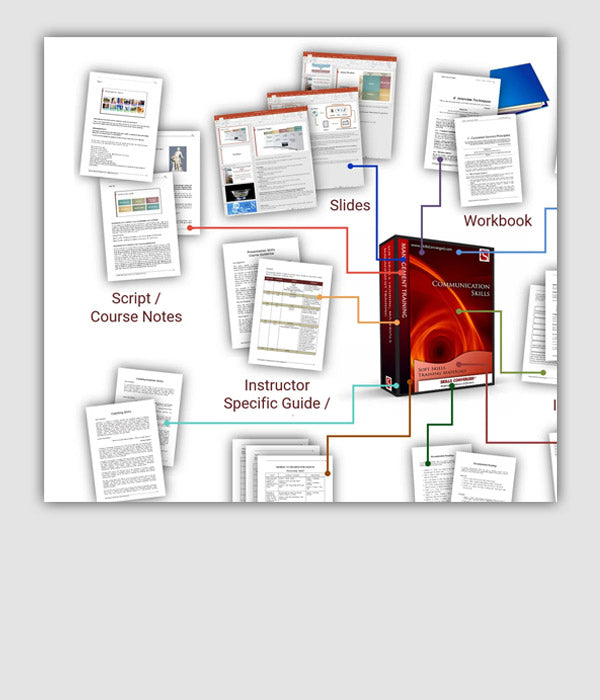
Soft Skills Training Materials
Get downloadable training materials

Online Train the Trainer Course:
Core Skills
Turn Your Expertise into Engaging, Well-Structured Training
Topics
Training Materials
Get downloadable training materials on: Management Training, Personal Development, Interpersonal Development, Human Resources, and Sales & Marketing
The Most Similar Exercises & Articles to This in Order of Similarity Are:






Resources for Trainers and Course Designers
Instructional Design Books
Practical books on course design, learner engagement and training delivery, available in paperback and ebook

Free Training Resources
Download a complete sample course with training activities, assessment forms and practical resources for trainers.

Comprehensive Body Language Guide
Explore body language, gestures, posture, facial expressions and non-verbal communication in one practical guide.

Train the Trainer Resources
Improve course design and delivery with practical guides, specialist books and Train the Trainer courses.
Leave a comment
All comments are moderated before being published.
This site is protected by hCaptcha and the hCaptcha Privacy Policy and Terms of Service apply.