


Purpose
This training exercise helps to emphasise the importance of giving open-ended instructions. Research shows that when the instructions are limiting or force a person or a group to consider only a subset of solutions, they are likely to produce less creative results.
In this exercise, delegates will go through a creative problem solving process and see the comparison between limiting and open-ended instructions for themselves.
Objective
Based on the given instructions, come up with a few brand names for a new product to be released to the market.
What You Need
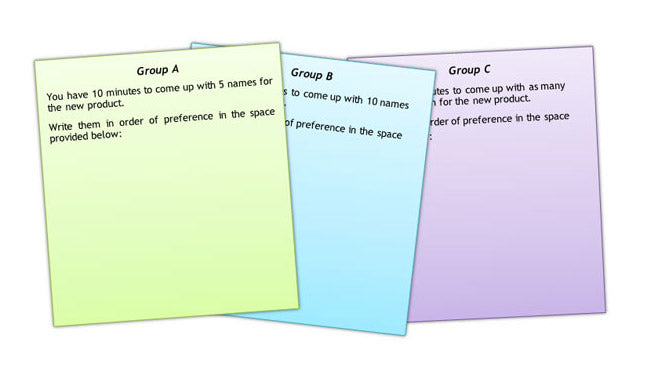
- Instructions for each group. You need three instructions as shown below.
- A wide area with partitions or separate rooms. It is ideal if groups cannot hear each other while going through this exercise. Overhearing other groups’ conversations can significantly affect the outcome of the exercise.
Setup
- You have two options here:
- Let delegates choose the product. Ask the delegates to consider a new product that they are planning to introduce to the market, but that it has no brand name yet. If all delegates are from the same company, they can choose an upcoming product (if it is possible to discuss it in front of you and each other). Otherwise ask them to consider a hypothetical product or a product that they like to see in the market based on their hobbies and interests. Encourage a discussion on this product so everyone understands what it is.
-
Tell them what the product is. To eliminate a potentially lengthy discussion on choosing a product, disagreements or brainstorming on product names before the main exercise, you ask them to consider a generic product of your choice. Examples are:
- A new salad takeaway released by a fast food chain.
- A new mobile phone with a micro projector
- A new mineral water
- A new soft drink
- Divide the delegates to three groups.
- Explain that each group needs to come up with a name for the product under consideration, though they need to do this by following the instructions given to them.
- Give each group one instruction sheet at random. They should not share their instructions with other groups.
- Separate the groups so they can work in isolation.
- Ask them to start brainstorming the problem.
- Allocate 10 minutes for this part.
- Bring back everyone and ask each group to read through their suggested product names while other groups listen.
- Ask everyone to compare all results and state which group came up with the most ideal or creative names. Expect them to choose results of Group C who had no limitation in their instructions and could be more creative.
- Follow with a discussion.
Timing
Explaining the Exercise: 5 minutes
Activity: 10 min brainstorming names + 5 min presenting names = 15 minutes
Group Feedback: 5 minutes
Discussion
Why do you think Group C came up with better results? What do you think was the difference between their instructions and yours? What did you think of the naming process? While going through the exercise, did you actually feel you were limited because of the instructions? (To Tutor: Sometimes limiting instructions are not even taken as limiting. They only affect the outcome without people realising what is happening to them). What do you think of typical instructions given at your workplace? Are people aware of the negative effects of limiting their instructions?
Instructions
To Tutor: Print each group’s instruction on a separate A4 sheet.
Group A
You have 10 minutes to come up with 5 names for the new product.
Write them in order of preference in the space provided below:
Group B
You have 10 minutes to come up with 10 names for the new product.
Write them in order of preference in the space provided below:
Group C
You have 10 minutes to come up with as many names as you can for the new product.
Write them in order of preference in the space provided below:
Ready-to-Use Soft Skills Training Materials
Editable slides, trainer notes, workbooks and exercises. Download, customise and reuse.
Why Choose Our Training Materials?

Online Train the Trainer Course:
Core Skills
CPD Accredited
Turn Your Expertise into Engaging, Well-Structured Training
Topics
Need a Complete Soft Skills Course to Deliver?
Save preparation time with ready-to-use course packs containing editable slides, detailed trainer notes, participant workbooks and engaging exercises.
Management ◆ Interpersonal Development ◆ Personal Development
The Most Similar Exercises & Articles to This in Order of Similarity Are:

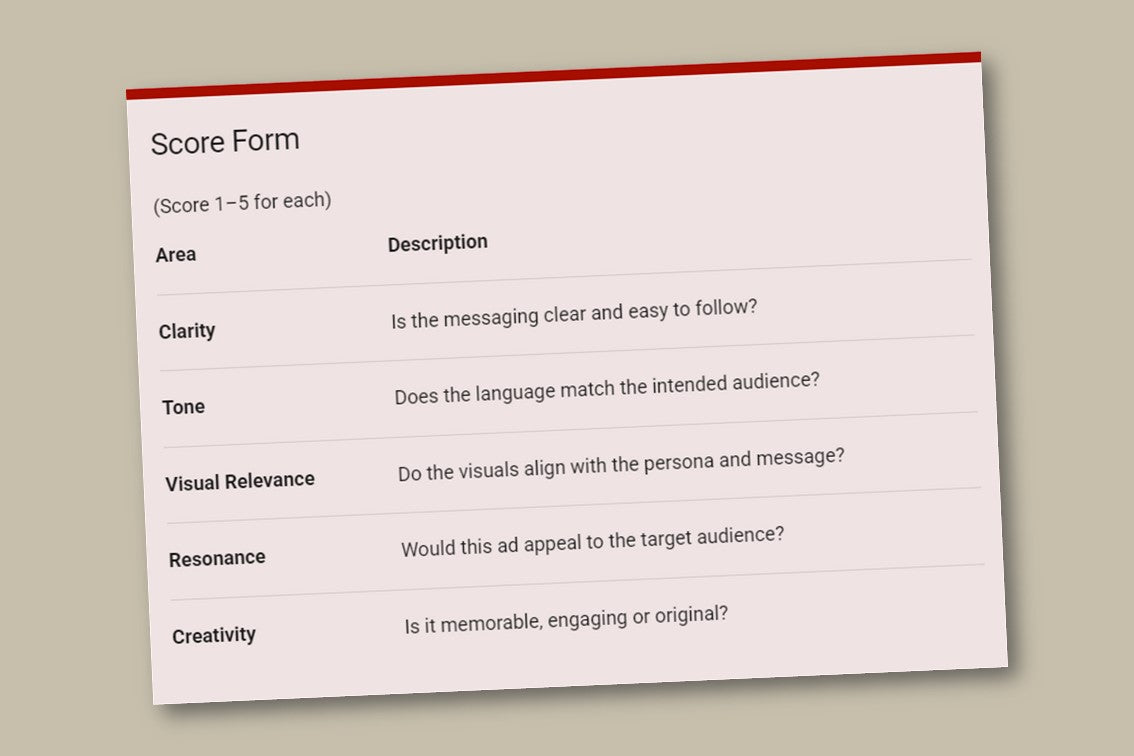




Resources for Trainers and Course Designers
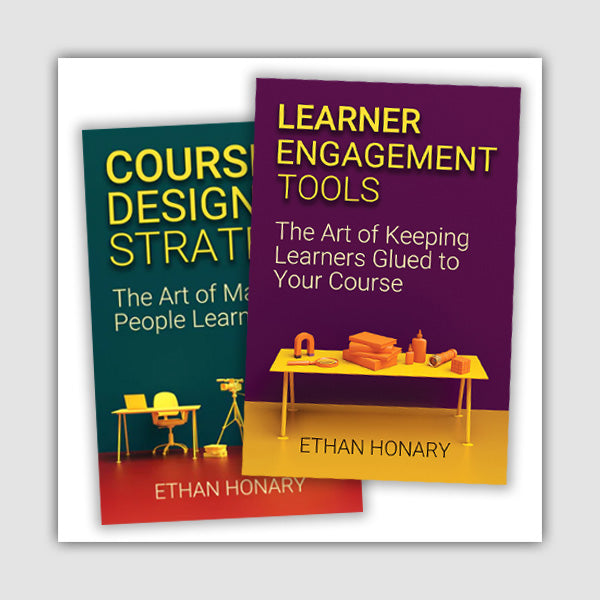
Instructional Design Books
Practical books on course design, learner engagement and training delivery, available in paperback and ebook

Free Training Resources
Download a complete sample course with training activities, assessment forms and practical resources for trainers.

Comprehensive Body Language Guide
Explore body language, gestures, posture, facial expressions and non-verbal communication in one practical guide.

Train the Trainer Resources
Improve course design and delivery with practical guides, specialist books and Train the Trainer courses.
Leave a comment
All comments are moderated before being published.
This site is protected by hCaptcha and the hCaptcha Privacy Policy and Terms of Service apply.