


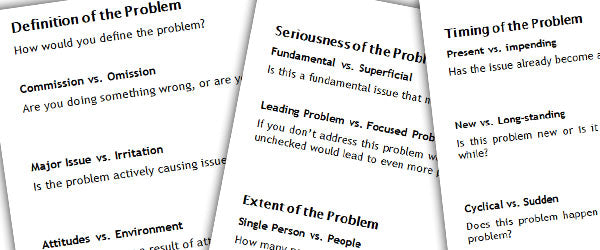
The following is a series of questions presented under a number of categories that help to analyse a given problem. The set of questions can be used in a handout for people who want to explore a given problem. The questions help delegates to consider different aspects of the problem and create a structured approach in asking the right questions.
You can also use this handout in problem solving exercises or as an extra training resource that can be made available to delegates while going through another exercise when addressing problems.
Instructions: For each question, consider the contrasting opposites and see where your problem lies. Then add more details as necessary to define the problem further in relation with the opposites mentioned in the question.
Definition of the Problem
How would you define the problem?
Commission vs. Omission
Are you doing something wrong, or are you failing to do something?
Major Issue vs. Irritation
Is the problem actively causing issues or is it just a source of irritation?
Attitudes vs. Environment
Is the problem as a result of attitudes or as a result of the environment?
Visible vs. Hidden
Is the problem clearly identifiable or is it hidden through relationships or work processes?
Scope of the Problem
Widespread vs. Local
Is the problem widespread (global) or it is applicable only to a local area (limited)?
Related vs. Isolated
Is the problem isolated or is it related to other problems?
Source vs. Result
Is this problem a source, leading to a series of other problems, or is this caused because of other problems or lack of addressing them?
Seriousness of the Problem
Fundamental vs. Superficial
Is this a fundamental issue that needs to be addressed or is it a nice-to-have?
Leading Problem vs. Focused Problem
If you don’t address this problem would it lead to more serious problems which if unchecked would lead to even more problems?
Extent of the Problem
Single Person vs. People
How many people are affected by this problem?
Shortage vs. Surplus
Is this problem because of having too much of something or too little?
Simple vs. Complex
Does this problem involve a complex set of relationships or is it simple?
Timing of the Problem
Present vs. impending
Has the issue already become a problem or is this an impending problem?
New vs. Long-standing
Is this problem new or is it an on-going problem that has been identified for a while?
Cyclical vs. Sudden
Does this problem happen regularly with various strengths or this a sudden new problem?
Ready-to-Use Soft Skills Training Materials
Editable slides, trainer notes, workbooks and exercises. Download, customise and reuse.
Why Choose Our Training Materials?

Online Train the Trainer Course:
Core Skills
CPD Accredited
Turn Your Expertise into Engaging, Well-Structured Training
Topics
Need a Complete Soft Skills Course to Deliver?
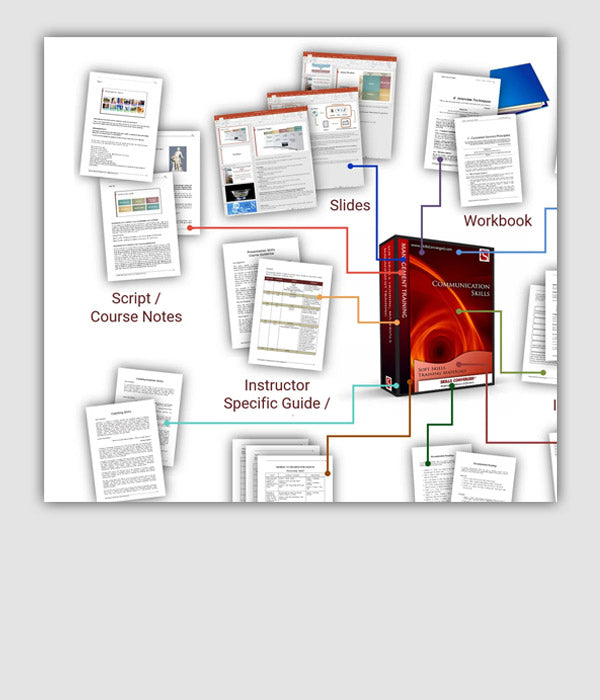
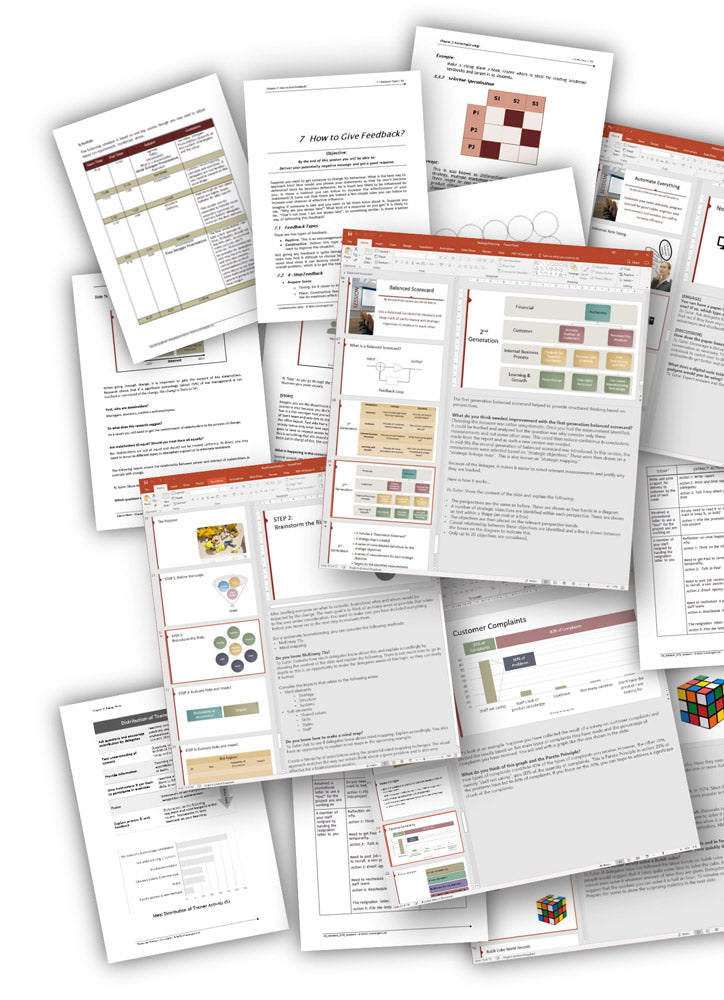
Save preparation time with ready-to-use course packs containing editable slides, detailed trainer notes, participant workbooks and engaging exercises.
Management ◆ Interpersonal Development ◆ Personal Development
The Most Similar Exercises & Articles to This in Order of Similarity Are:






Resources for Trainers and Course Designers
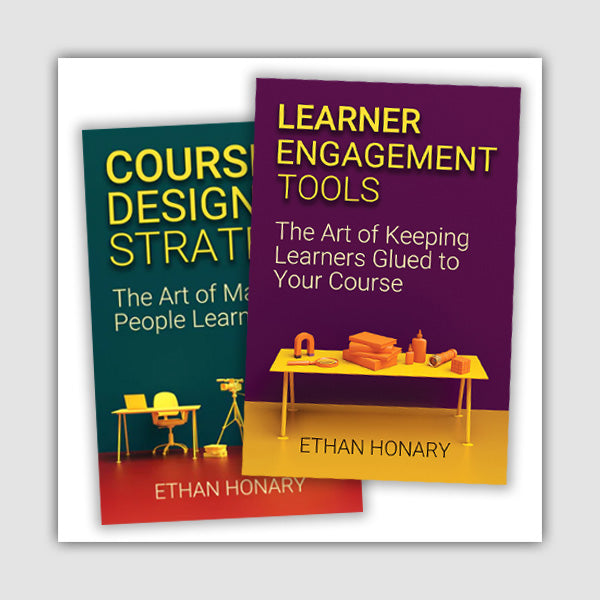
Instructional Design Books
Practical books on course design, learner engagement and training delivery, available in paperback and ebook

Free Training Resources
Download a complete sample course with training activities, assessment forms and practical resources for trainers.

Comprehensive Body Language Guide
Explore body language, gestures, posture, facial expressions and non-verbal communication in one practical guide.

Train the Trainer Resources
Improve course design and delivery with practical guides, specialist books and Train the Trainer courses.
Leave a comment
All comments are moderated before being published.
This site is protected by hCaptcha and the hCaptcha Privacy Policy and Terms of Service apply.