



Purpose
This is powerful exercise in creative writing where delegates get to write a phone conversation based on certain limiting criteria. The structured approach to writing helps to make the task more creative and also showcases the power of creative narrative which can make communication more effective and concise.
Objective
Create a phone conversation between three people without saying what is stated by the person on the phone.
What You Need
- Papers
Setup
- Divide the delegates to groups of 3. If you have one or two people left ask each to join a group of 3.
- Explain to delegates that in this exercise they will be creating a phone conversation taking place between three people; two people on the phone and one person in the room overhearing the conversation. Groups with 4 people should work on a conversation between two people on the phone and two other people present in the room.
- Consider the following when creating the conversation:
- The conversation taking place between the two people on the phone must be related to and potentially involve the third (and fourth) person in the room.
- The third person cannot use the phone to talk directly to the people on the line.
- Use a conversation to let the readers/listeners know what is said by the person on the line. This is implied in the conversation or interaction between the two people in the room.
- Aim for a fairly complicated, intriguing and involving conversation; one that can engage an audience and capture their attention.
- It can only consist of a conversation. There should not be any narration.
- Aim to write about 600 words.
- Ask the groups to create their conversations. If needed they can roleplay parts to see what works and what doesn’t. They should record the conversation on paper so they can then read it later for everyone.
- Allocate 40 minutes for this part. You can optionally allocate more time depending on your training needs.
- After the allocated time bring everyone back together. Ask each group one by one to roleplay their conversation for others.
- After each roleplay, ask delegates to comment on the roleplay and the conversation. Encourage them to express what they thought of it in terms of creativity, complexity and expression. In particular, ask them if they could easy follow what was said by the person on the line.
- Continue until all groups have presented their conversations.
- Follow with a discussion.
Timing
Explaining the Exercise: 5 minutes
Activity: 40 min creating the conversations + (N * 10 min roleplay and feedback) = 70 minutes for 3 groups
Group Feedback: 10 minutes
Discussion
How did you approach the task? Did you use any systematic method to imply what the person on the line was saying through the conversation which was heard in the room? For example, did you write the entire conversation between the three characters first before modifying it to suit the needs of the exercise? What did you think of the conversations that other groups presented? Which group impressed you the most? What can you learn from their approach? If you had another chance to go through this exercise, what would you do differently?
Ready-to-Use Soft Skills Training Materials
Editable slides, trainer notes, workbooks and exercises. Download, customise and reuse.
Why Choose Our Training Materials?

Online Train the Trainer Course:
Core Skills
CPD Accredited
Turn Your Expertise into Engaging, Well-Structured Training
Topics
Need a Complete Soft Skills Course to Deliver?
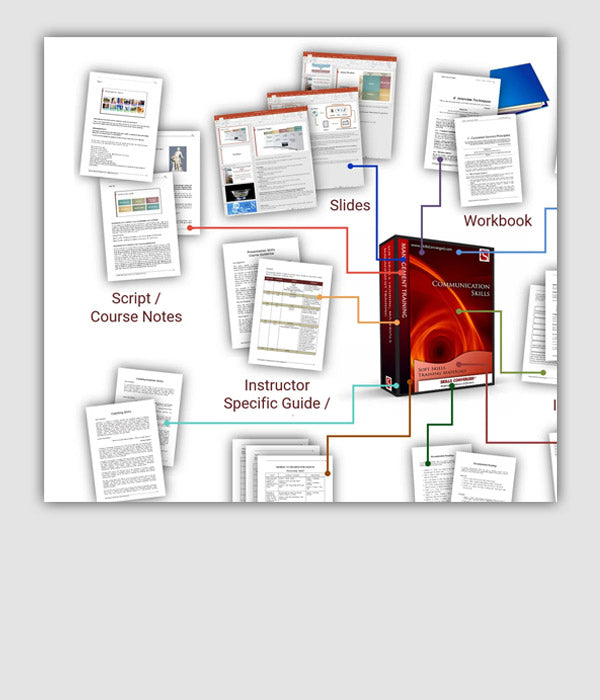
Save preparation time with ready-to-use course packs containing editable slides, detailed trainer notes, participant workbooks and engaging exercises.
Management ◆ Interpersonal Development ◆ Personal Development
The Most Similar Exercises & Articles to This in Order of Similarity Are:






Resources for Trainers and Course Designers
Instructional Design Books
Practical books on course design, learner engagement and training delivery, available in paperback and ebook

Free Training Resources
Download a complete sample course with training activities, assessment forms and practical resources for trainers.

Comprehensive Body Language Guide
Explore body language, gestures, posture, facial expressions and non-verbal communication in one practical guide.

Train the Trainer Resources
Improve course design and delivery with practical guides, specialist books and Train the Trainer courses.
Leave a comment
All comments are moderated before being published.
This site is protected by hCaptcha and the hCaptcha Privacy Policy and Terms of Service apply.