


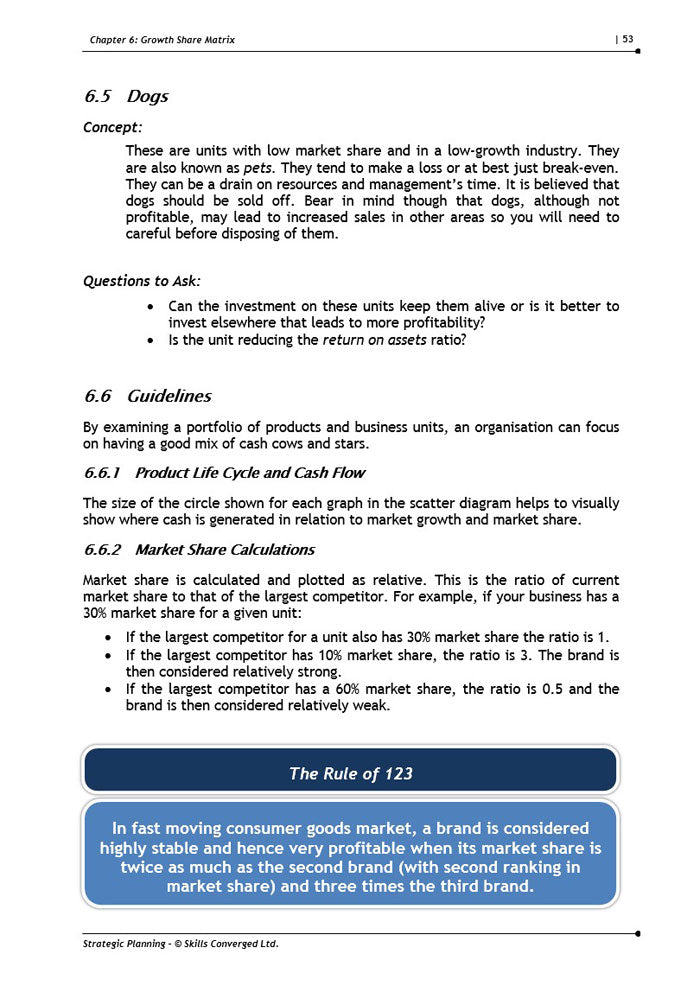
Strategic Planning Training Materials
This ready-to-use package of fully editable strategic planning training materials helps trainers deliver a practical one-day course for leaders and business decision-makers. Through worked examples and exercises, participants learn to define strategic objectives, analyse internal and external conditions, assess markets and business units, and connect strategy with measurable performance using established planning frameworks.
Format: Fully Editable Word & PowerPoint
Delivery: Instant Download & Ready to Use
Licence: Reusable for Unlimited Workshops
Trainer Friendly: Comprehensive Trainer Notes
Trusted Worldwide
Skills Converged customers include the NHS, Adidas, the BBC, BMW and Etihad Airways and many universities. Our training materials are used in more than 100 countries.
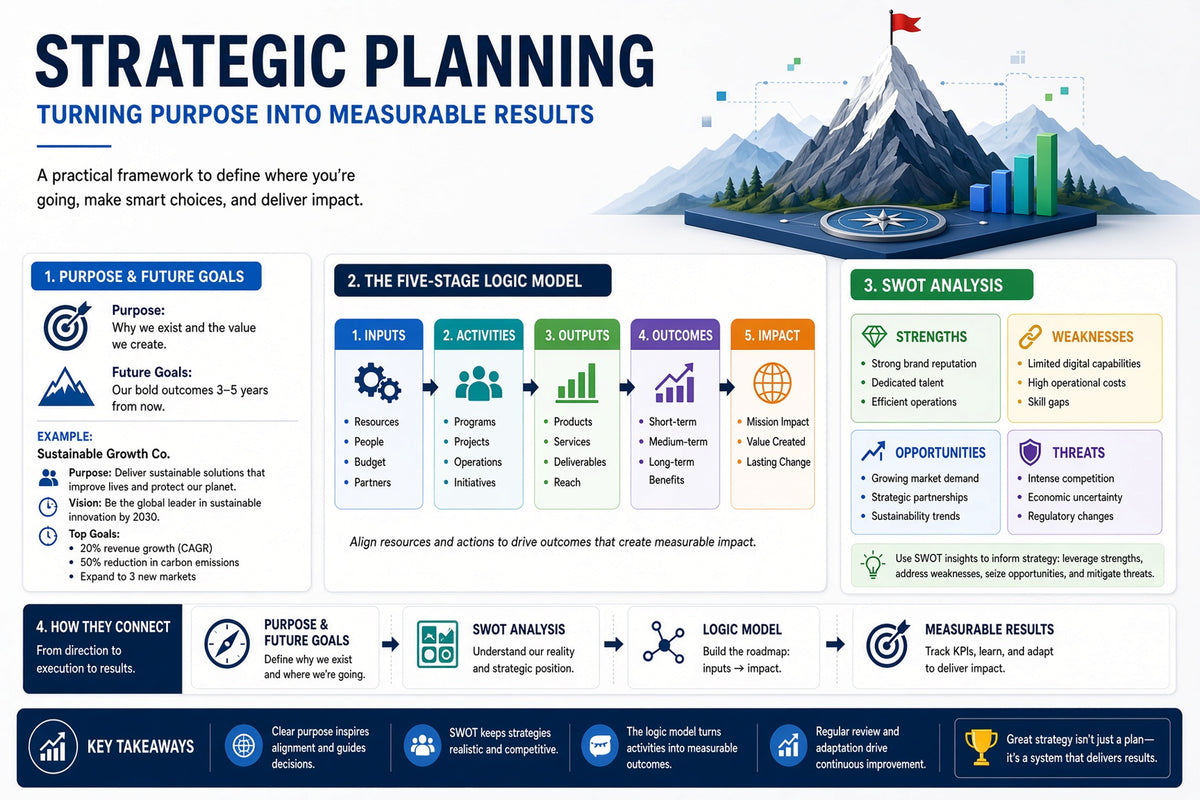
Key Topics Covered in the Strategic Planning Course
What Participants Will Learn
By the end of this course participants will be able to:
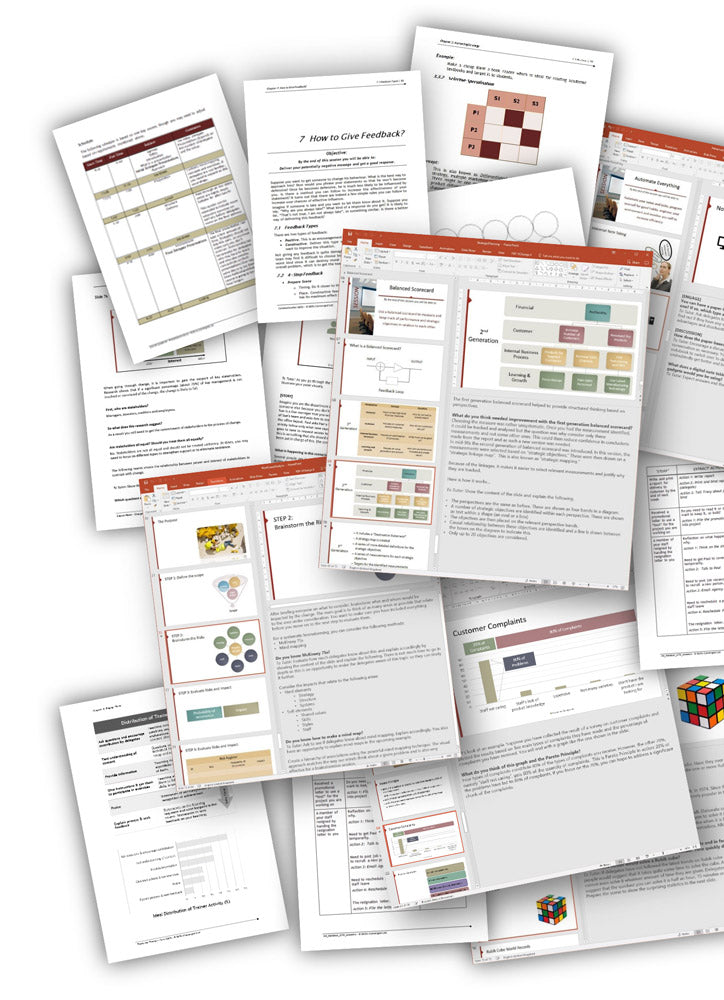
What Is Included
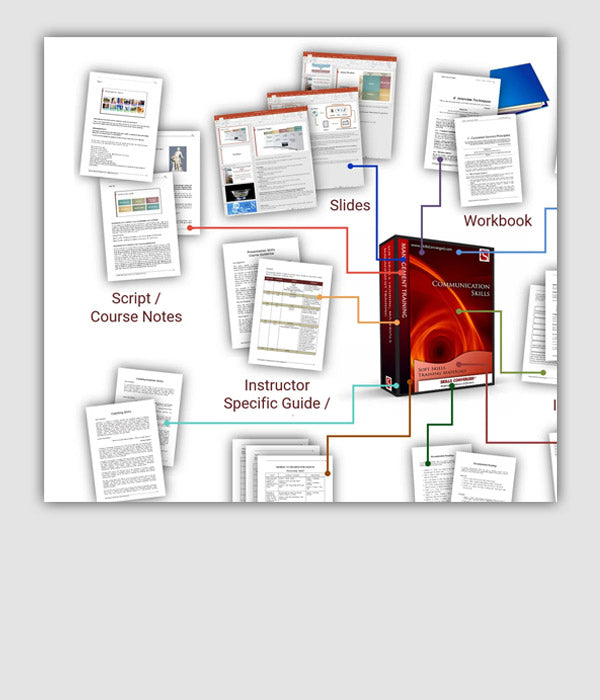
Everything you need to run the course:
- Slides
- Trainer Notes
- Workbook
- Exercises
- Handouts
- Specific Course Guidelines
- Agenda and Course Outline
- Training Methodology Guidelines
- Feedback Forms
- Certificate of Achievement
- Recommended Readings
Bonus ebook included: How to Increase the Impact of Exercises and Get the Best Results
Fully Customisable Training Course Material
Detailed Syllabus for the Strategic Planning Course
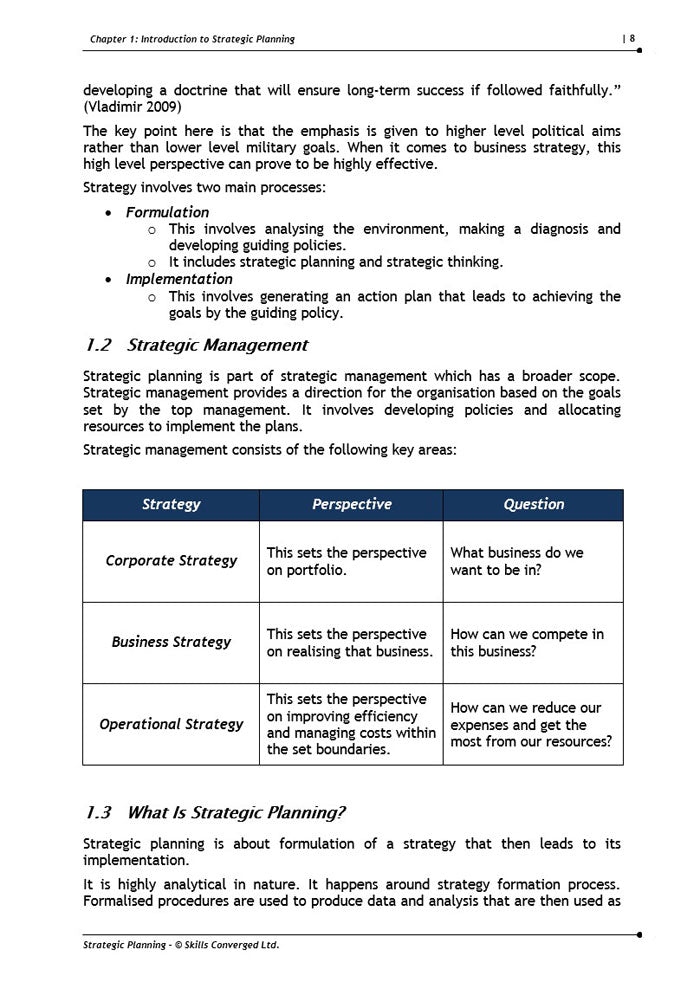
Good strategy skills are highly prized in corporate leaders. In fact, recent surveys published in the Wall Street Journal, suggest that the most sought-after skill in an executive leader is strategic thinking. It is a skill that can make all the difference for a given organisation whatever its size.
There has been much progress in the art of strategic planning and strategic thinking in the past couple of decades. The methods have helped many successful businesses cope with the ever increasing demands of customers as well as dealing with increased competition in a largely global market.
Fortunately, much like creativity skills, strategic thinking is a skill that can be learned methodically. You can utilise a variety of tools that will help you collect data systematically, analyse them and obtain guidelines to make strategic decisions.
Many of such tools are commonly taught in business schools around the world. In this course, participants will learn about a series of most commonly used strategic planning tools and see how each can help them gain a new perspective on the operation and future of a given business. After each tool has been explored, the delegates will have the opportunity to practice it by going through relevant exercises.
Learn to systematically analyse the competitive situation of a given business and formulate an action plan based on objectives
This course is suitable for anyone who is in a leadership role or in a position where decisions must be made about the current state and future of a given endeavour.
Many of these tools are used in conjunction with each other. Delegates will learn how the results of each can be used as inputs for another or use several tools together to make an informed decision.
In this highly practical course participants will learn:
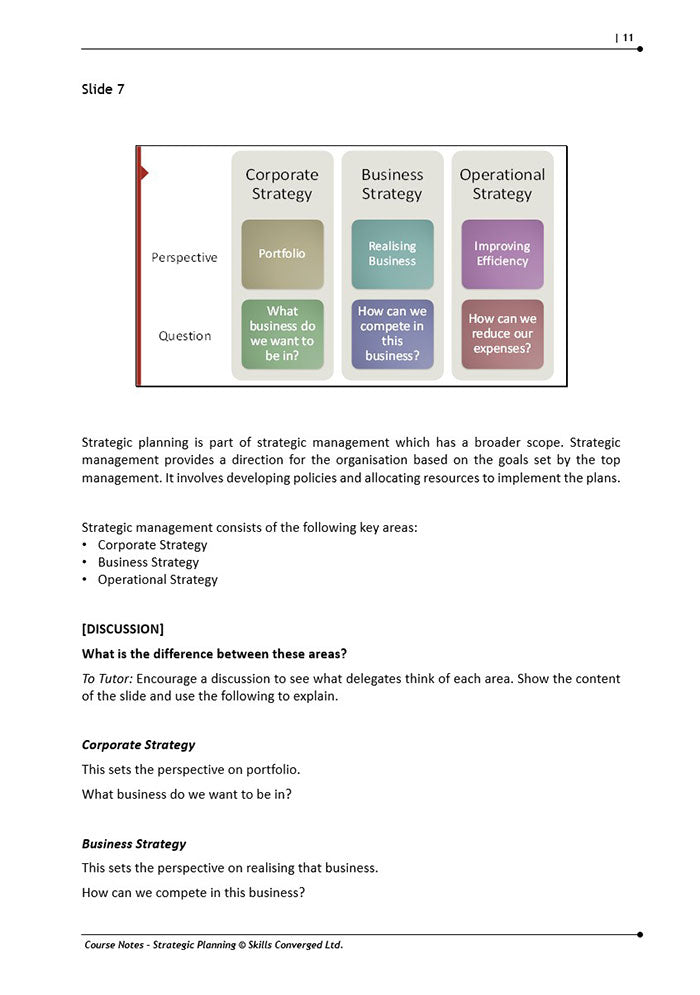
What Is Strategic Planning?
- Where does strategic planning fit into the overall strategic management?
- What is the best approach to strategic planning?
- How does strategic planning compare to strategic thinking?
- How would you use a handy method to set objectives and popularise them?
Strategic Planning Process
- What are the five stages of strategic planning?
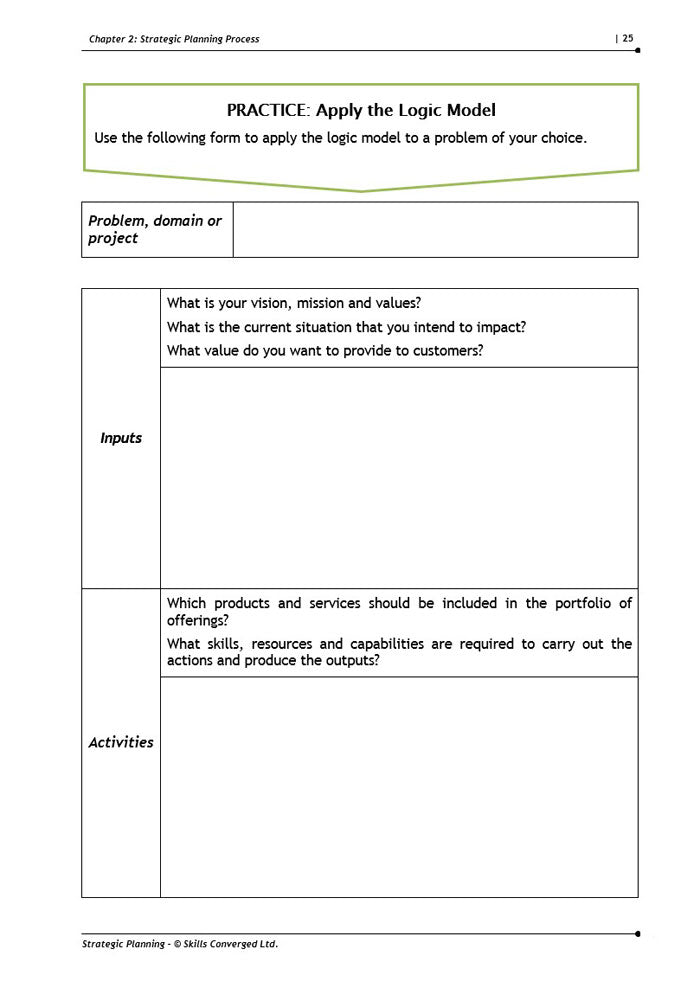
- What is logic model?
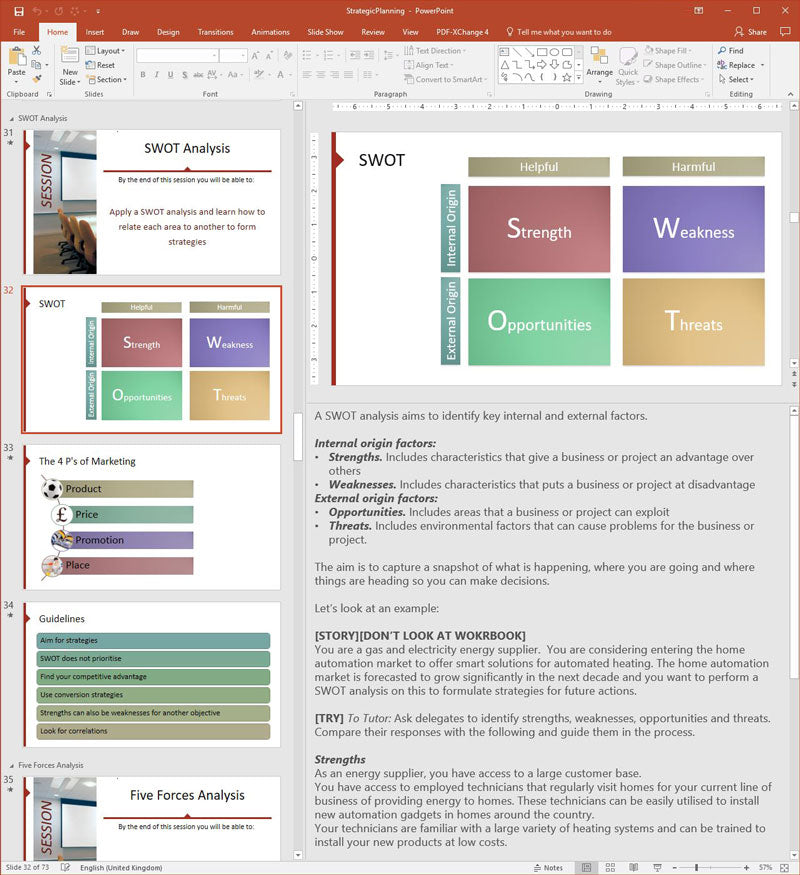
SWOT Analysis
- What is SWOT analysis?
- What are the 4 P’s of marketing and how can they help you while applying a SWOT analysis?
- What are the strengths and weaknesses of carrying out a SWOT analysis?
Five Forces Analysis
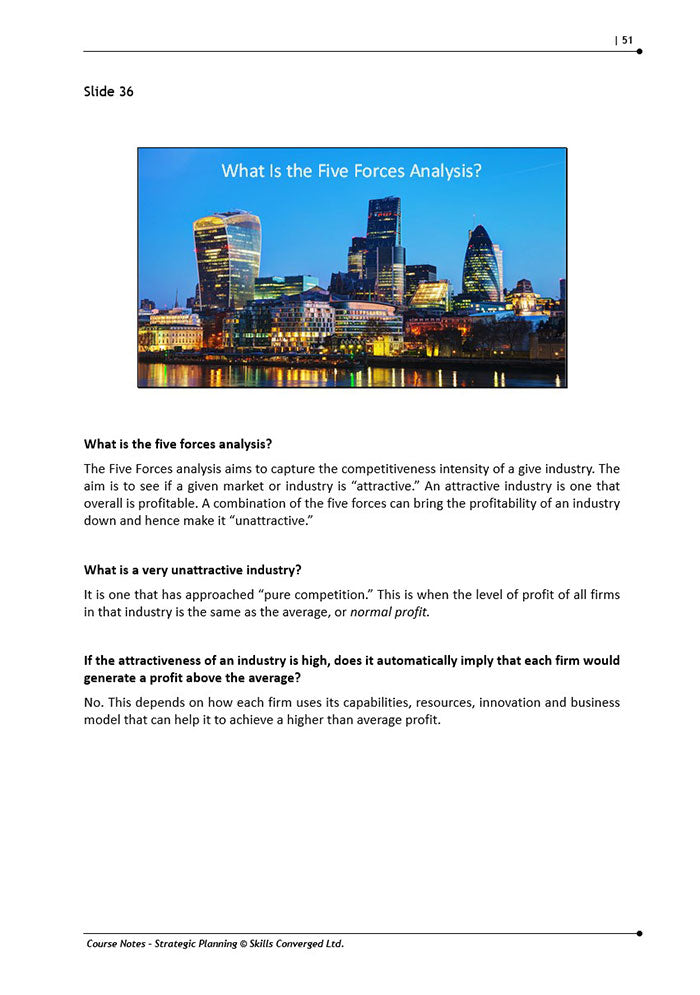
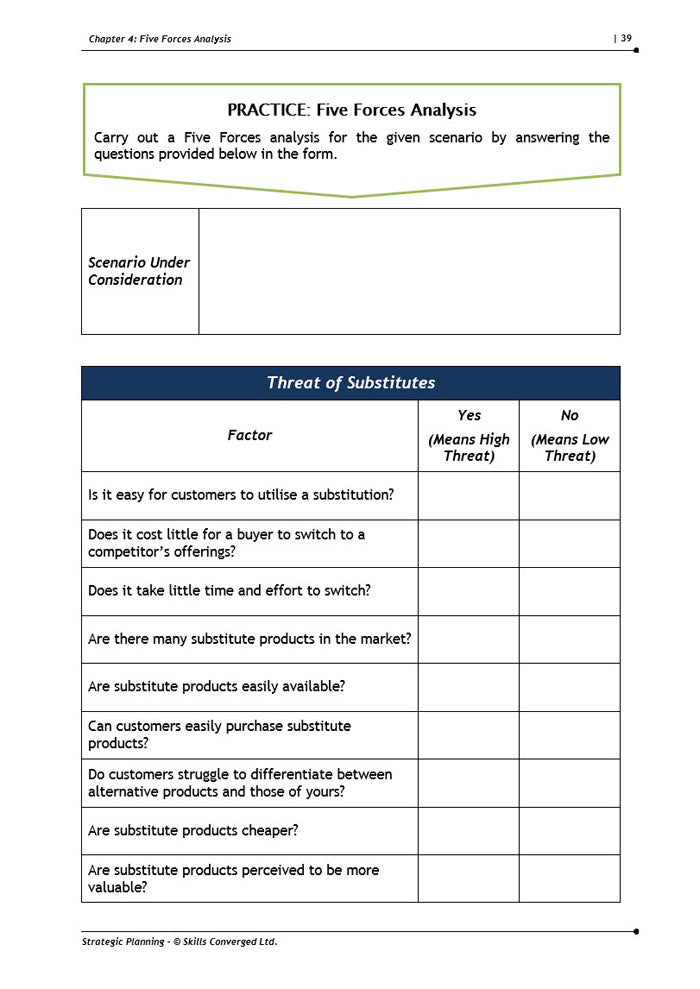
- What is the Five Forces analysis?
- How can you identify threats in a given industry?
- PESTLE Analysis
- What is PEST, PESTLE or PESTEL analysis?
- How can you use PEST analysis to obtain a macro-environmental picture where a business operates and make strategic decisions based on that?
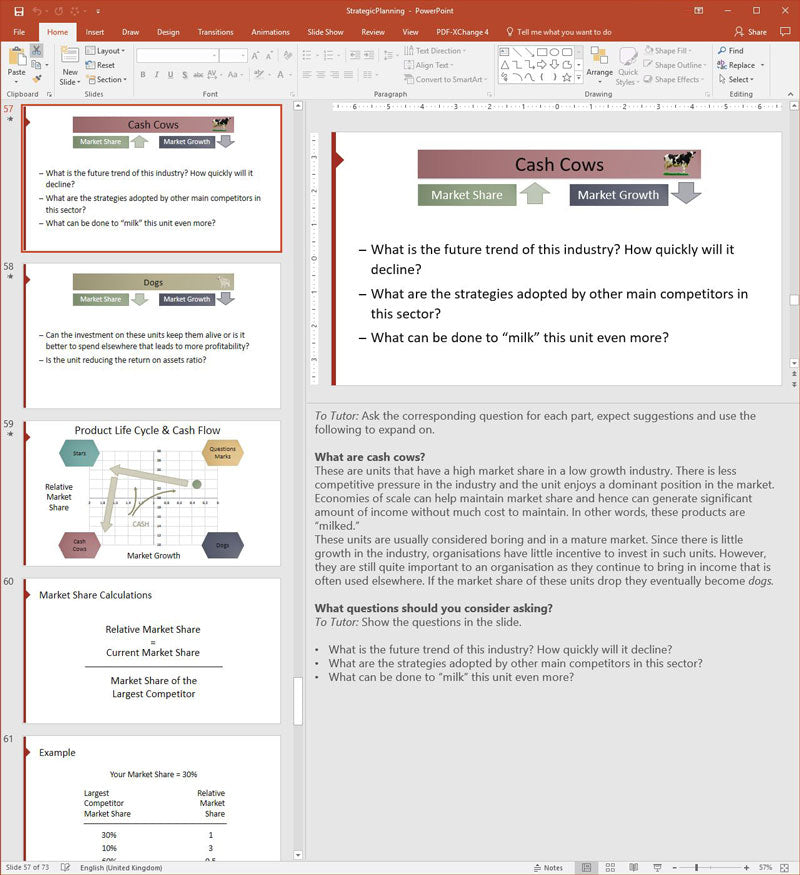
Growth Share Matrix
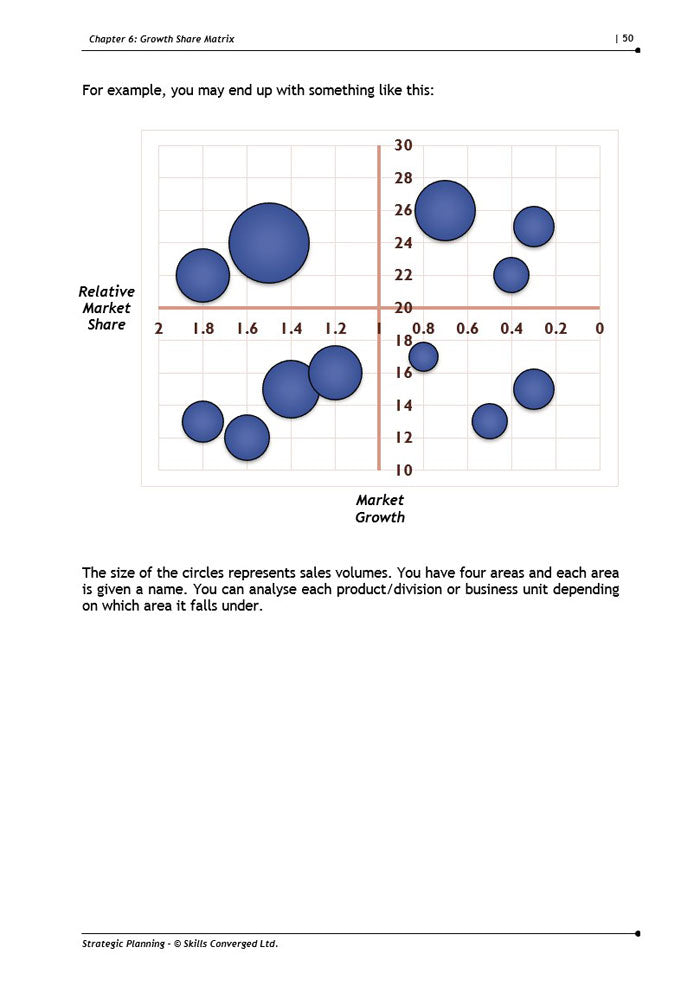
- What is the growth share matrix and why was it created?
- How can you evaluate business units in relation to each other and their market in order to make better strategic decisions?
- How can you monitor the progress of business units and plan ahead as products go through their product life cycle?
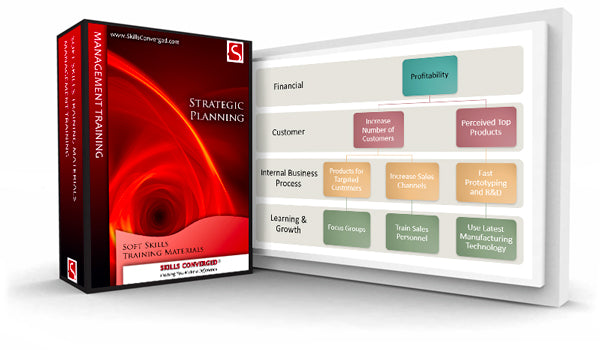
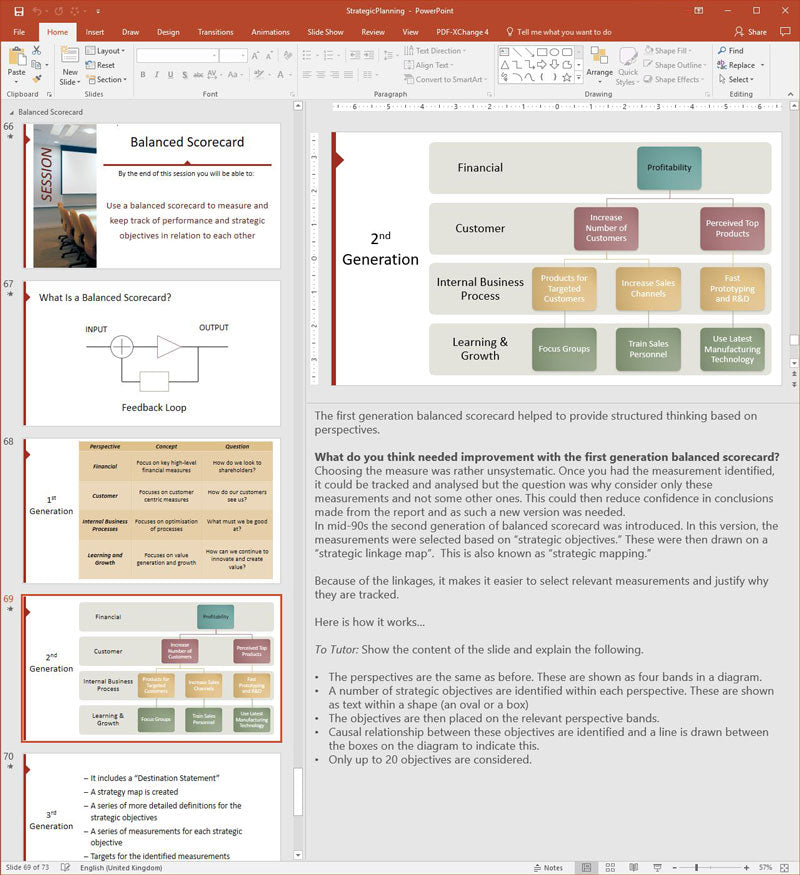
Balanced Scorecard
- What is a balanced scorecard?
- What are the three generations of the balanced scorecard and what was needed for the creation of each new generation?
- How can you carry out strategic mapping, set objectives and achieve them?
“If you don’t have a plan for yourself,
you will be part of someone else’s.”Proverb
Multi-Course Pricing Discount
10% OFF when you purchase 2 or more training materials packs.
20% OFF when you purchase 3 or more training materials packs.
30% OFF when you purchase 10 or more training materials packs.
Courseware Features
Buy & Download Instantly
- Add this course to your basket and pay securely using a debit or credit card, PayPal, Apple Pay or Google Pay.
- After payment, you will be taken immediately to the download page. We will also email your download link.
- Download and unzip the package to access the editable Word and PowerPoint training resources.
Buying several courses? Multi-course discounts are applied automatically in your basket.
Payment, Downloads and DiscountsCustomise the content, add your branding and combine it with your own materials. Supplied in editable DOCX and PPTX formats
Reprint participant workbooks as often as required.
A coordinated collection of trainer and participant resources that include slides, trainer notes, workbook, exercises and supporting documents such as printable certificates and feedback forms.
Content and design informed by educational psychology, behavioural science and business practice.
Includes detailed guidance to help you prepare and deliver the course confidently. We specialise in training trainers, so our course materials are designed around methods that work in real-world training delivery.
Examples, case studies and exercises support practice, engagement and long-term retention.
About the Design Philosophy of Strategic Planning Course
Used by Trainers in
100+ Countries
Our Training Materials Are Used Worldwide
View a selection of our customers
Read customer testimonials





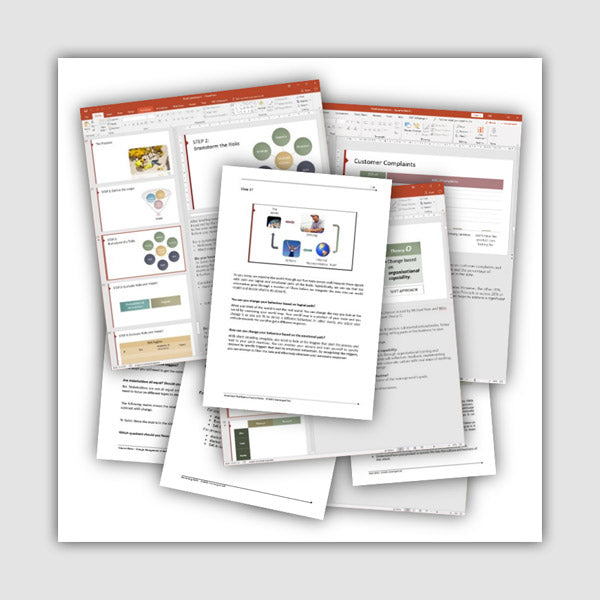
Preview a Complete Sample Course
See an example pack containing slides, trainer notes, a workbook, exercises and handouts.

Train the Trainer Resources
Improve course design and delivery with practical guides, specialist books and Train the Trainer courses.

Frequently Asked Questions
Find answers about editing, licensing, payments, downloads and technical requirements.
For Trainers and Training Providers
Expand your course portfolio, adapt editable materials to each audience and prepare professional training in less time
For L&D and HR Teams
Give internal facilitators consistent, professionally designed courseware that can be customised to your organisation and reused across teams