





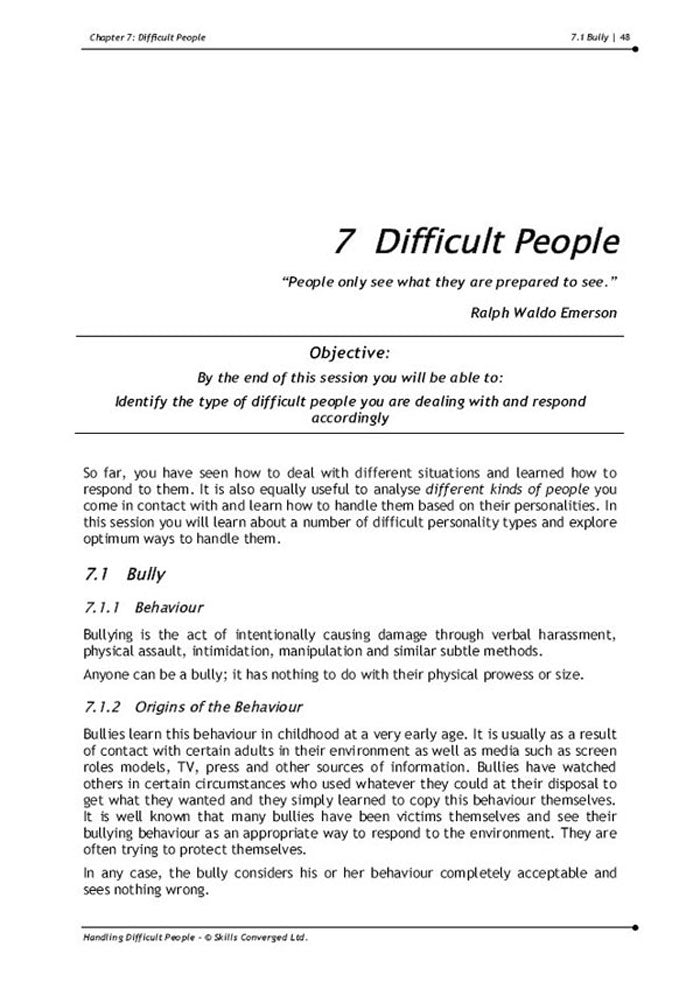
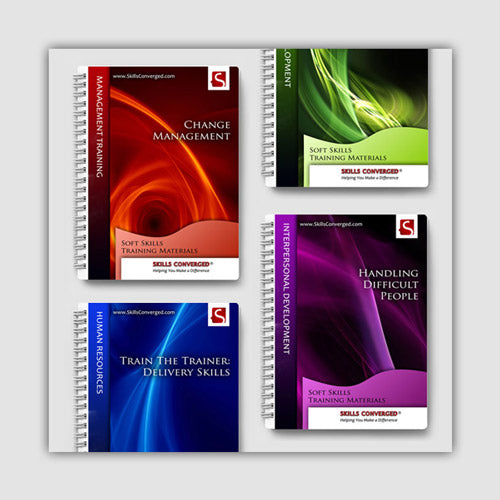
Handling Difficult People Training Materials
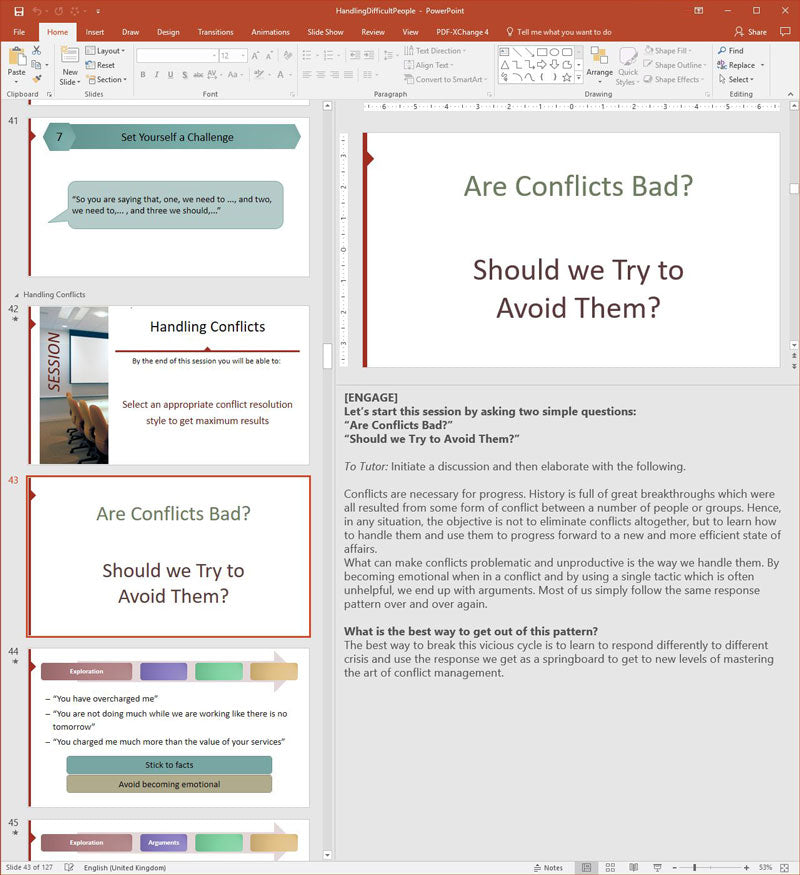
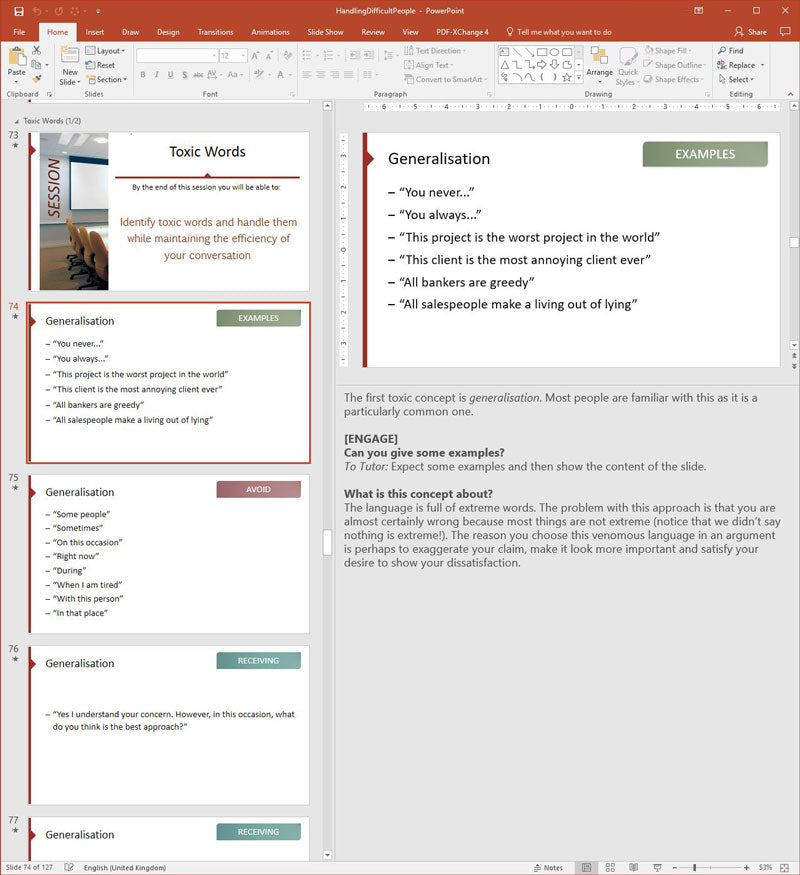
Developed for trainers tackling challenging workplace behaviour, these ready-to-deliver handling difficult people training materials combine psychological insight with concise communication frameworks. Roleplays, case studies and practical exercises teach participants to adopt a productive mindset, choose an effective response style, manage confrontations, avoid toxic language and adapt their approach to recurring behavioural patterns.
Format: Fully Editable Word & PowerPoint
Delivery: Instant Download & Ready to Use
Licence: Reusable for Unlimited Workshops
Trainer Friendly: Comprehensive Trainer Notes
Trusted Worldwide
Skills Converged customers include the NHS, Adidas, the BBC, BMW and Etihad Airways and many universities. Our training materials are used in more than 100 countries.

Key Topics Covered in the Handling Difficult People Course
What Participants Will Learn
By the end of this course participants will be able to:
What Is Included
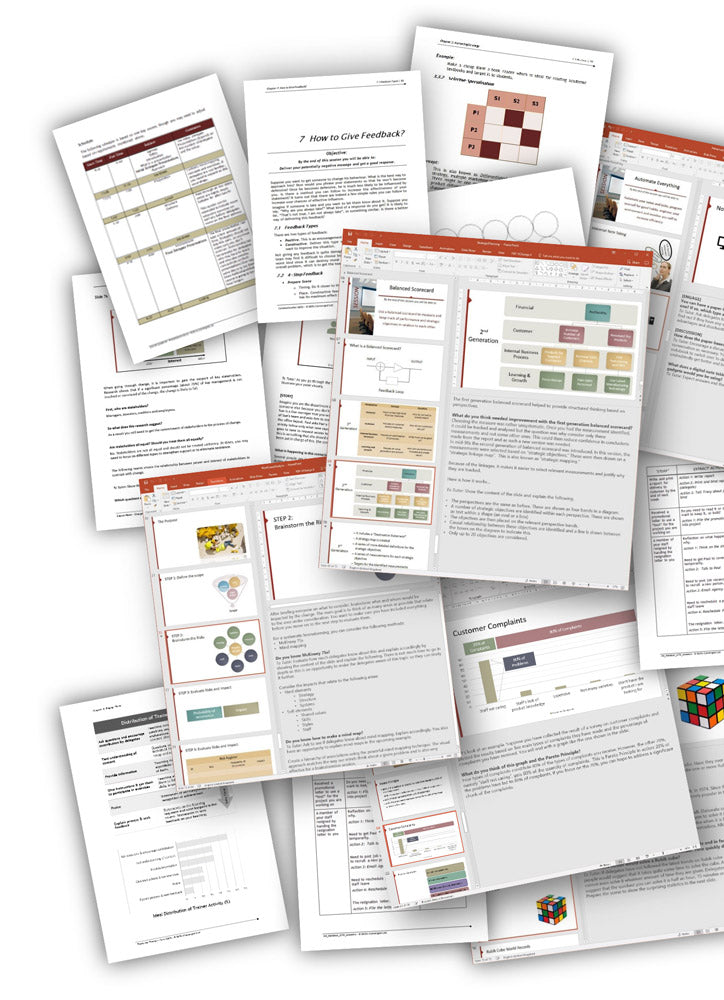
Everything you need to run the course:
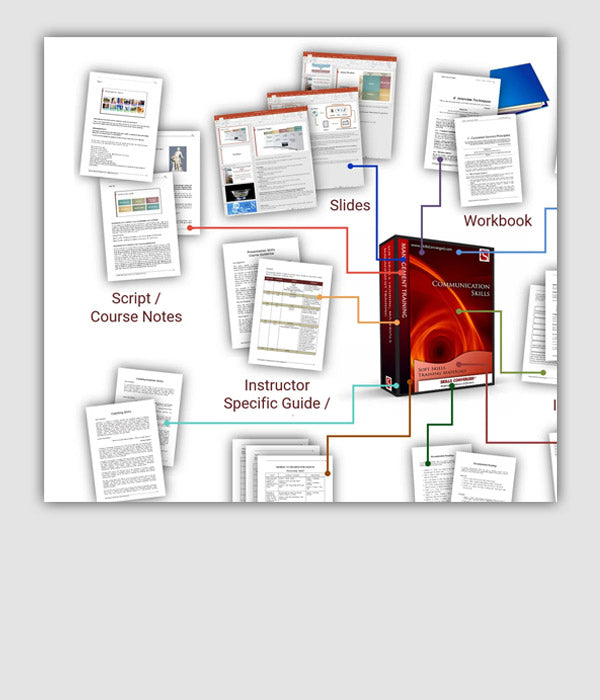
- Slides
- Trainer Notes
- Workbook
- Exercises
- Handouts
- Specific Course Guidelines
- Agenda and Course Outline
- Training Methodology Guidelines
- Feedback Forms
- Certificate of Achievement
- Recommended Readings
Bonus ebook included: How to Increase the Impact of Exercises and Get the Best Results
Fully Customisable Training Course Material
Detailed Syllabus for the Handling Difficult People Course
We often have to deal with difficult people in our professional environment and sometimes even in our personal everyday life. Any interaction or communication with such people can prove challenging and consumes a lot of our time and energy. Such situations can easily turn emotional and unproductive with long term effects on relationships.
Fortunately difficult people are well studied and psychologists have found a great deal on the origin of their behaviour and subsequently on how best to deal with them based on their inherent weaknesses. This course relies heavily on the latest psychological research and provides several concise easy-to-use formulas that delegates can use to deal with challenging situations promptly.
The course is packed with exercises, relevant case studies and role plays that enables delegates to understand the methods better and practice them immediately after introduction. Optional activities and exercises are also provided to easily extend the course and adjust the pace for different needs.
In this highly practical course you will learn:
What Is the Ideal Strategy?
- What is the best mental attitude when confronted with challenging people?
- What is an ideal long term strategy?
- Why self-examination is important and how best to do it?
- How to deal with conflicts, physically and emotionally
- What is “ironic processes of mental control” and how can it help in optimising the delivery of your demands?
- How to commit to action and get optimum results next time you are challenged by a difficult person
How to Respond to People
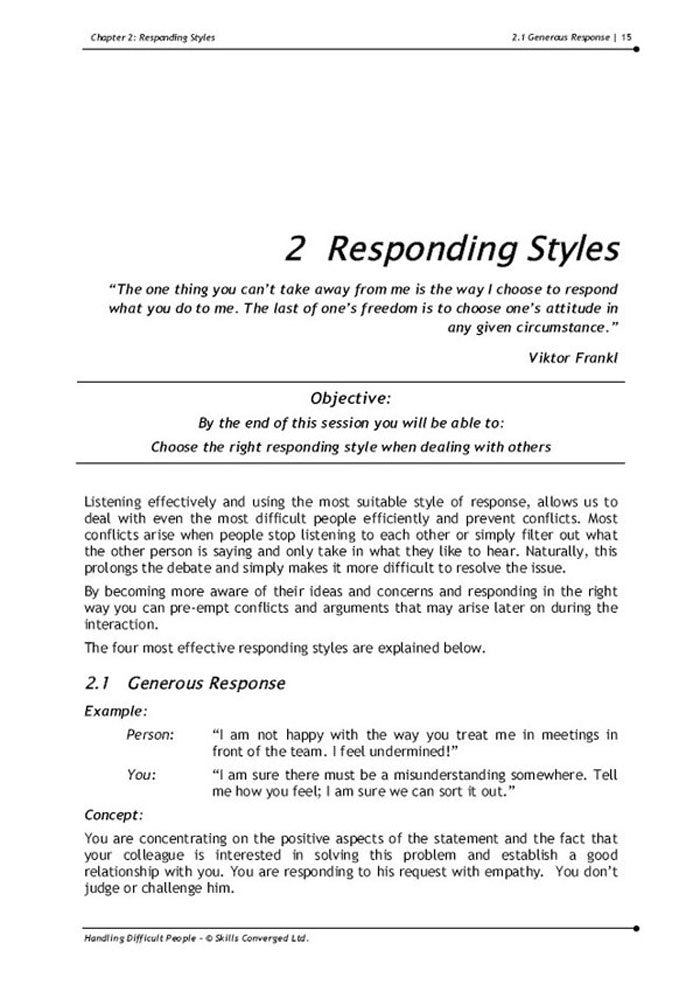
- What are the four responding styles, when to use them and where should you avoid using them?
- How to avoid unpredictable reactions to your comments by observing and analysing the other person for specific signs
- How to listen and respond emphatically and connect when needed
How to Engage in a Conversation
- What to do to stay focused on a conversation and avoid drifting away?
- What is ‘click-wirr’ and how to use it in a conversation?
- How to ask good questions based on your encounter
- What non-verbal signals you should be aware of and use?
How to Handle Conflicts
- What is the optimum process of conflict resolution?
- What are conflict resolutions styles?
- How to use the styles in sequence to get maximum results
How to Deal with Confrontations
- What is APA communication model and how can you use it to manage difficult people?
- How to use the 5-Step Guide to Confrontations
- What can be learned from confrontation examples?
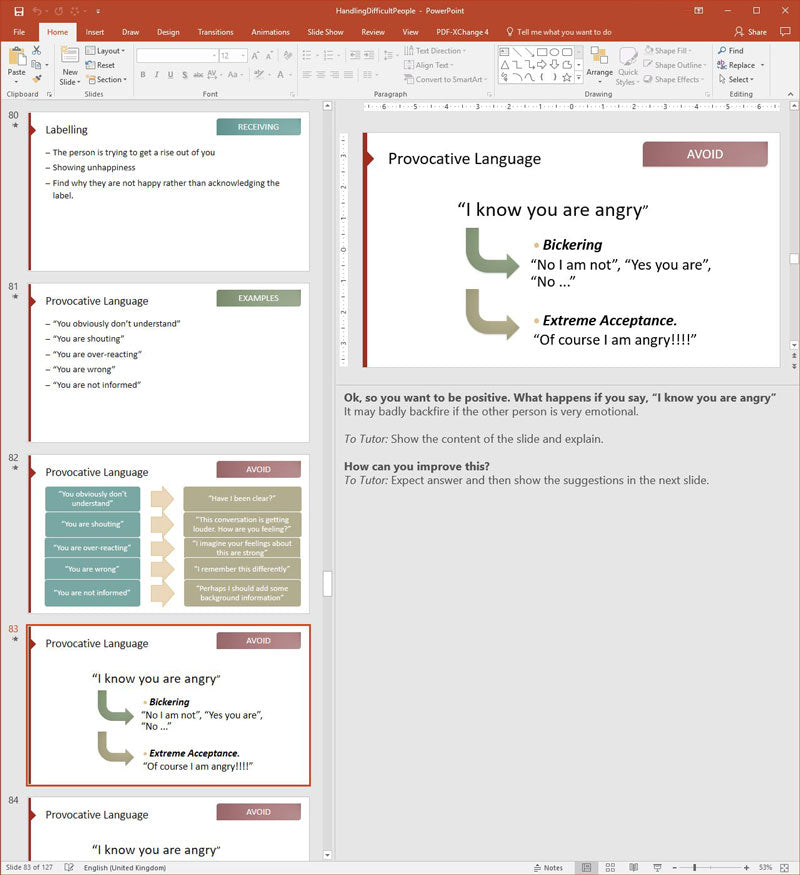
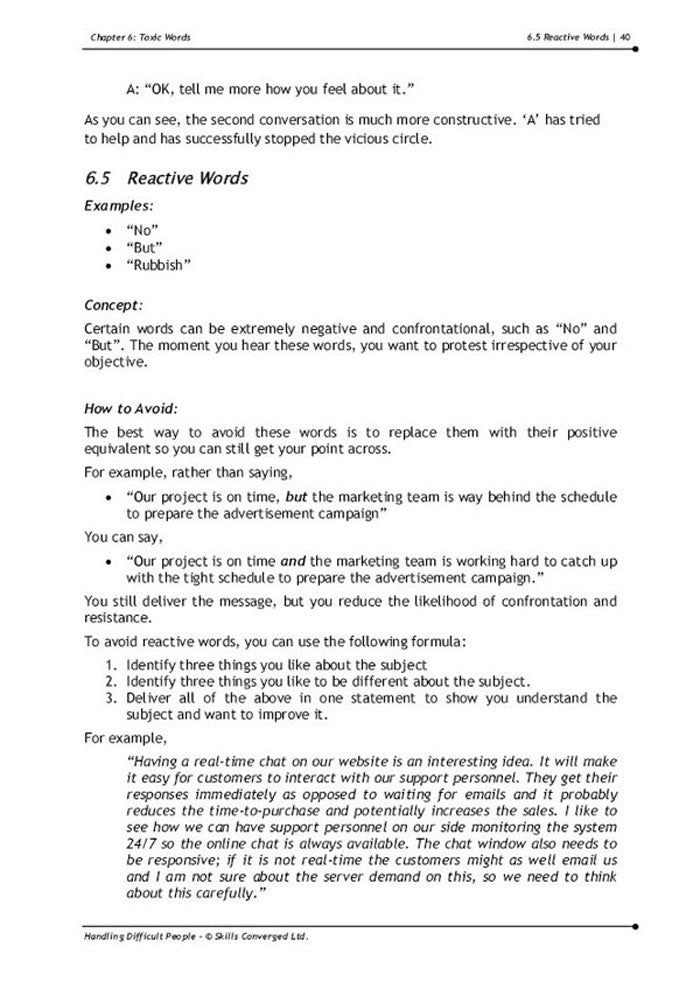
How to Deal with Reactive and Toxic Words
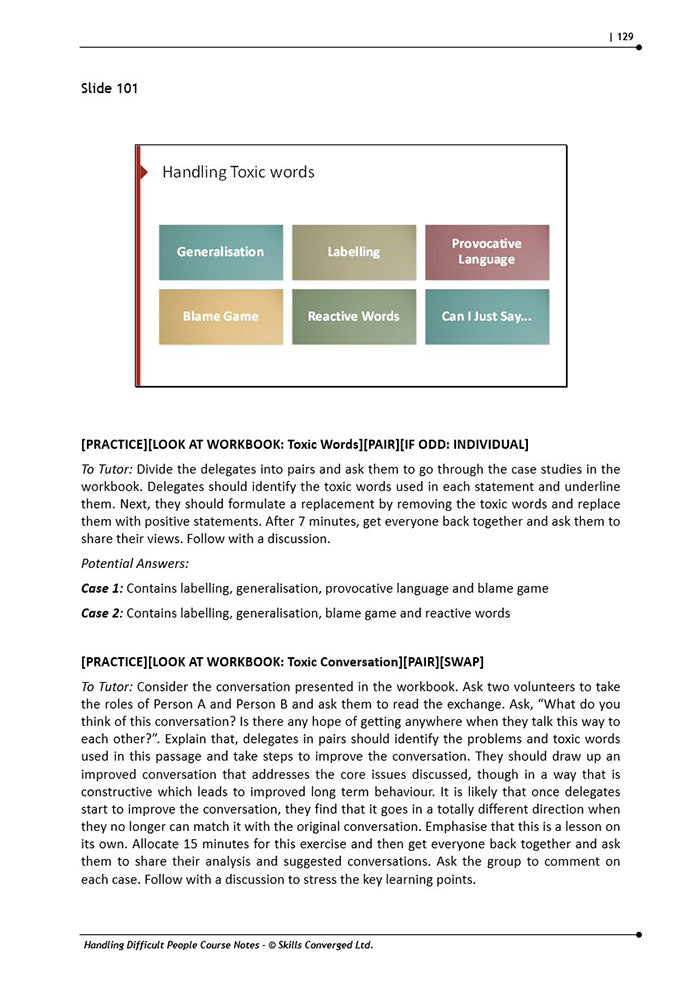
- How to prevent a challenging conversation by choosing the right words
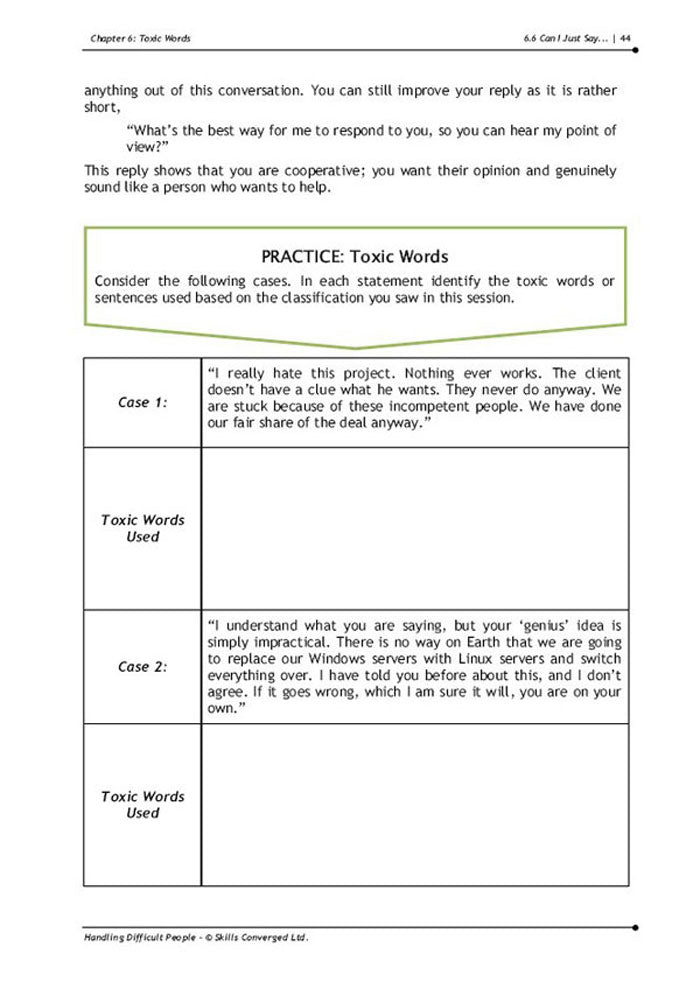
- What are the toxic statements, phrases, gestures and attitudes that can significantly affect your conversation and relationship with the other person?
- How to avoid using them and handle people who use them on you
How to Look for Patterns
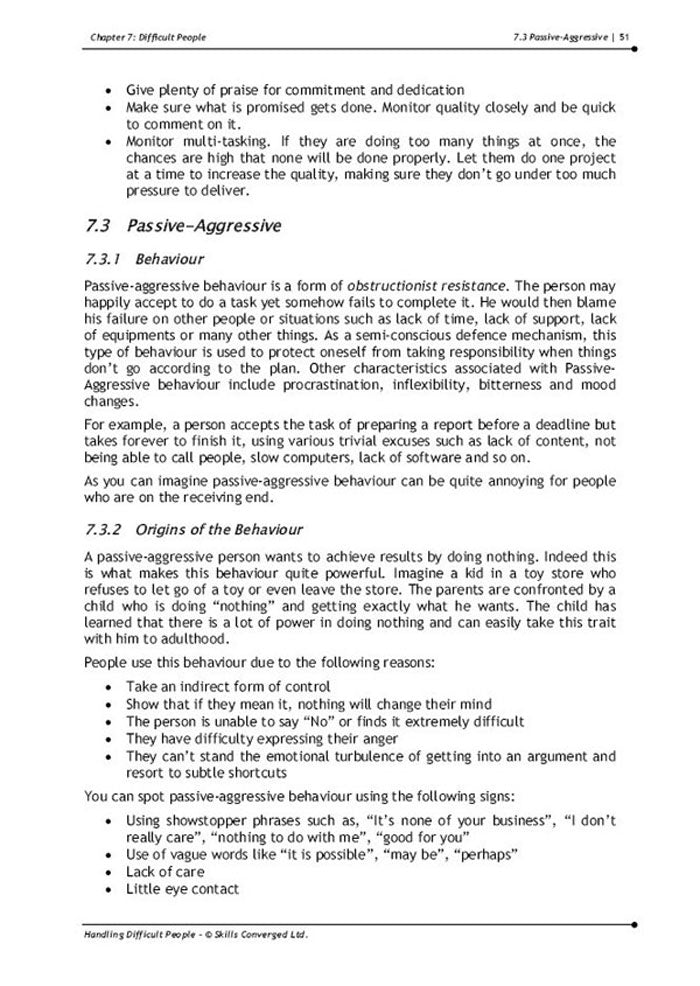
- What are the characteristics of difficult people and how to deal with them?
- What are the example behaviours?
- What are the origins of theirs behaviour?
- How to use these patterns to handle difficult people
“If you don't like something change it; if you can't change it, change the way you think about it.”
Mary Engelbreit
Multi-Course Pricing Discount
10% OFF when you purchase 2 or more training materials packs.
20% OFF when you purchase 3 or more training materials packs.
30% OFF when you purchase 10 or more training materials packs.
Courseware Features
Buy & Download Instantly
- Add this course to your basket and pay securely using a debit or credit card, PayPal, Apple Pay or Google Pay.
- After payment, you will be taken immediately to the download page. We will also email your download link.
- Download and unzip the package to access the editable Word and PowerPoint training resources.
Buying several courses? Multi-course discounts are applied automatically in your basket.
Payment, Downloads and DiscountsCustomise the content, add your branding and combine it with your own materials. Supplied in editable DOCX and PPTX formats
Reprint participant workbooks as often as required.
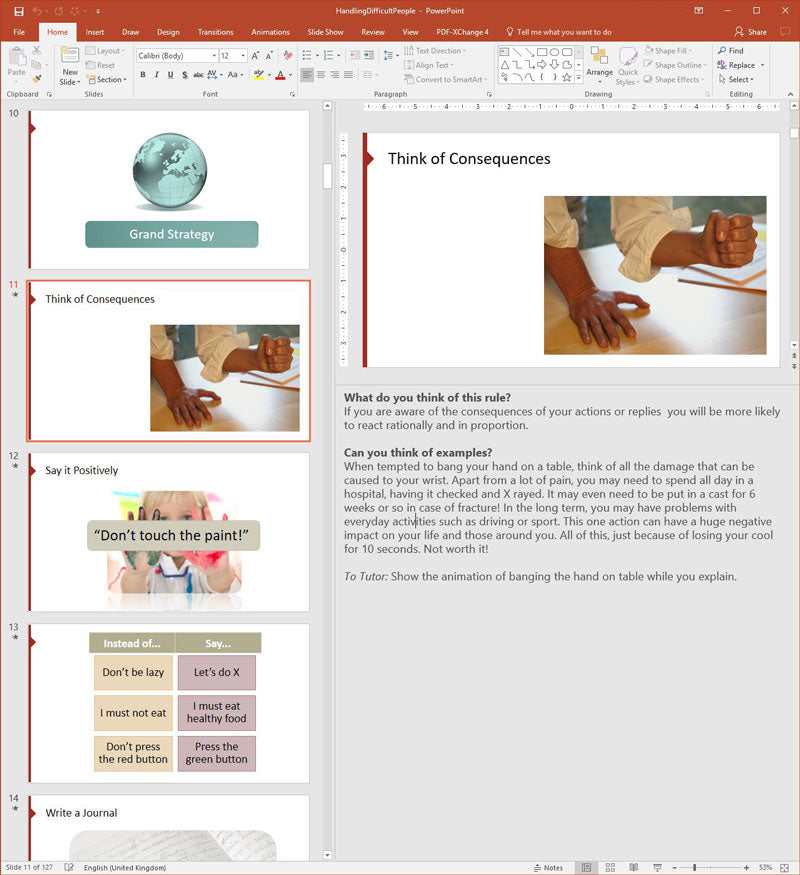
A coordinated collection of trainer and participant resources that include slides, trainer notes, workbook, exercises and supporting documents such as printable certificates and feedback forms.
Content and design informed by educational psychology, behavioural science and business practice.
Includes detailed guidance to help you prepare and deliver the course confidently. We specialise in training trainers, so our course materials are designed around methods that work in real-world training delivery.
Examples, case studies and exercises support practice, engagement and long-term retention.
About the Design Philosophy of Handling Difficult People Course
Used by Trainers in
100+ Countries
Our Training Materials Are Used Worldwide
View a selection of our customers
Read customer testimonials





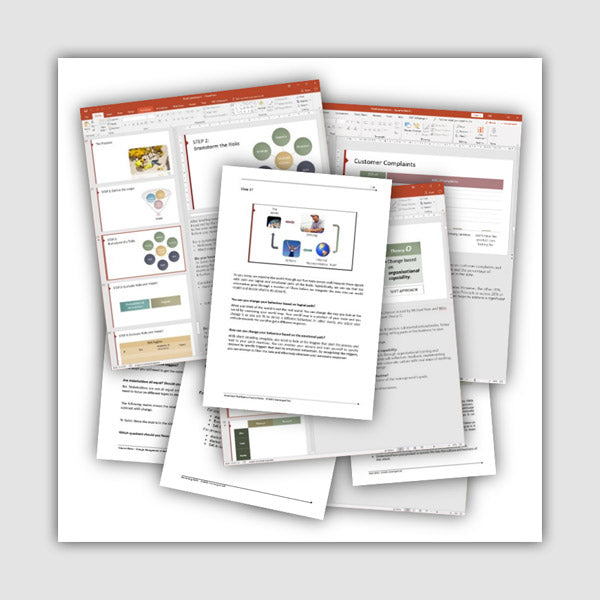
Preview a Complete Sample Course
See an example pack containing slides, trainer notes, a workbook, exercises and handouts.

Train the Trainer Resources
Improve course design and delivery with practical guides, specialist books and Train the Trainer courses.

Frequently Asked Questions
Find answers about editing, licensing, payments, downloads and technical requirements.
For Trainers and Training Providers
Expand your course portfolio, adapt editable materials to each audience and prepare professional training in less time
For L&D and HR Teams
Give internal facilitators consistent, professionally designed courseware that can be customised to your organisation and reused across teams