

About Dr Ethan Honary
I am the founder of Skills Converged, a training designer and author specialising in course design, training delivery, learner engagement and the psychology of learning.
My route into this field began not in a training room, but in software engineering, artificial intelligence and robotics.
From Artificial Intelligence to Human Learning
After completing my PhD, I worked on international projects in the space industry, including projects with the European Space Agency concerned with sending autonomous robots to Mars.
Working in artificial intelligence naturally led me towards cognitive psychology. To create intelligent systems, we need to ask how people perceive, reason, remember and learn. I became increasingly interested in these questions, particularly in how the workings of the mind affect our ability to acquire knowledge and develop skills.
At the same time, working in companies showed me that technical ability was only one part of professional success. Projects also depended on management, communication, teamwork and many of the other abilities commonly described as soft skills. I attended courses in these areas and gradually began teaching others, first in technical subjects and then in management and soft skills.
Experiencing many different courses also showed me how much their quality varied. A good course could improve performance and productivity. A poor one could consume a great deal of everyone’s time while changing very little. Neither the learners nor the trainer gained much from that.
This convinced me that professional training could make a real difference, but only if it was designed and delivered well.
Establishing Skills Converged
I established Skills Converged in 2008 and began delivering courses to the wider public, particularly in management, productivity and soft skills.
I later started developing complete training materials for the wider trainer community. That brought a new level of responsibility. If other trainers were going to use my materials, often without me in the room, the courses needed to do more than look polished or contain plenty of information. Every explanation, activity and exercise had to contribute to genuine learning.
I found myself thinking carefully about how ideas should be introduced, when learners should participate, what they should practise and how a course should progress from explanation to application. As training expanded from the classroom into online and self-paced formats, the same questions had to be considered in new ways.
That work eventually led me to the question that has kept me busy ever since: what does it really take to design a good course?
My Approach to Learning
I do not believe that learning is simply a matter of transferring information from a trainer to a learner. Information is the raw material of learning, but presenting it is not enough. Slides have their place, as do explanations, but learners cannot learn merely by watching information go past.
Learners need to pay attention, think, respond, practise and make meaningful connections for themselves. This is why I encourage trainers to ask carefully structured questions, create opportunities for discussion and give learners useful problems to work through. You as a trainer, or your course, needs to make learners think.
Practice is particularly important. When people are developing a skill, they need opportunities to attempt it, receive feedback, make adjustments and try again. Getting something wrong is not a failure of the learning process. Very often, it is the learning process.
I also believe that learners should learn from one another. Pair work, small-group activities and structured discussions allow people to test ideas, hear different perspectives and connect new knowledge to their own experience. The trainer’s role is to create and guide this environment, not simply to remain the source of all the information in the room.
What Learning Art Taught Me
To deepen my understanding of teaching methods, I spent several years exploring 19th-century atelier techniques used to train artists. These methods have evolved over several hundred years, and there is much we can learn from them that applies to modern training in almost any field.
The Atelier Method confirmed for me many of the core principles recognised in educational psychology today. Learners work towards a clear goal, practise deliberately, compare what they produced with what they intended, make adjustments and try again. Progress is iterative, and it requires persistence, especially when things do not go to plan (insider tip: they often don’t).
I have written extensively about the Atelier Method in my articles and books because it provides such a clear example of how practical skills develop.
I am also a keen amateur painter, working mainly in charcoal, oils and pastels. Continuing to learn from the other side of the classroom keeps me close to the challenges learners face. It also keeps me humble. Figurative drawing has a remarkable ability to reveal the difference between what you intended to capture and what you actually did.
My Work Today
Today, I am increasingly focused on helping trainers around the world design and deliver better courses. When training is designed well, people can learn more in less time, retain it for longer and apply it with greater confidence. Technology will continue to change, and AI will give us increasingly powerful tools, but the learner is still human. Attention, memory, motivation and skill development remain subject to the principles and limitations of the human brain and body.
My aim is to explore those principles and translate academic research into practical methods trainers can use when they actually need them. That might mean regaining attention during a session, helping a discouraged learner move beyond repeated failure, designing the right exercise for a particular need or creating an online course that people want to finish. These are the challenges I explore through my books, courses, articles and continuing research. If they matter to you too, I invite you to come along and explore the ideas with me.
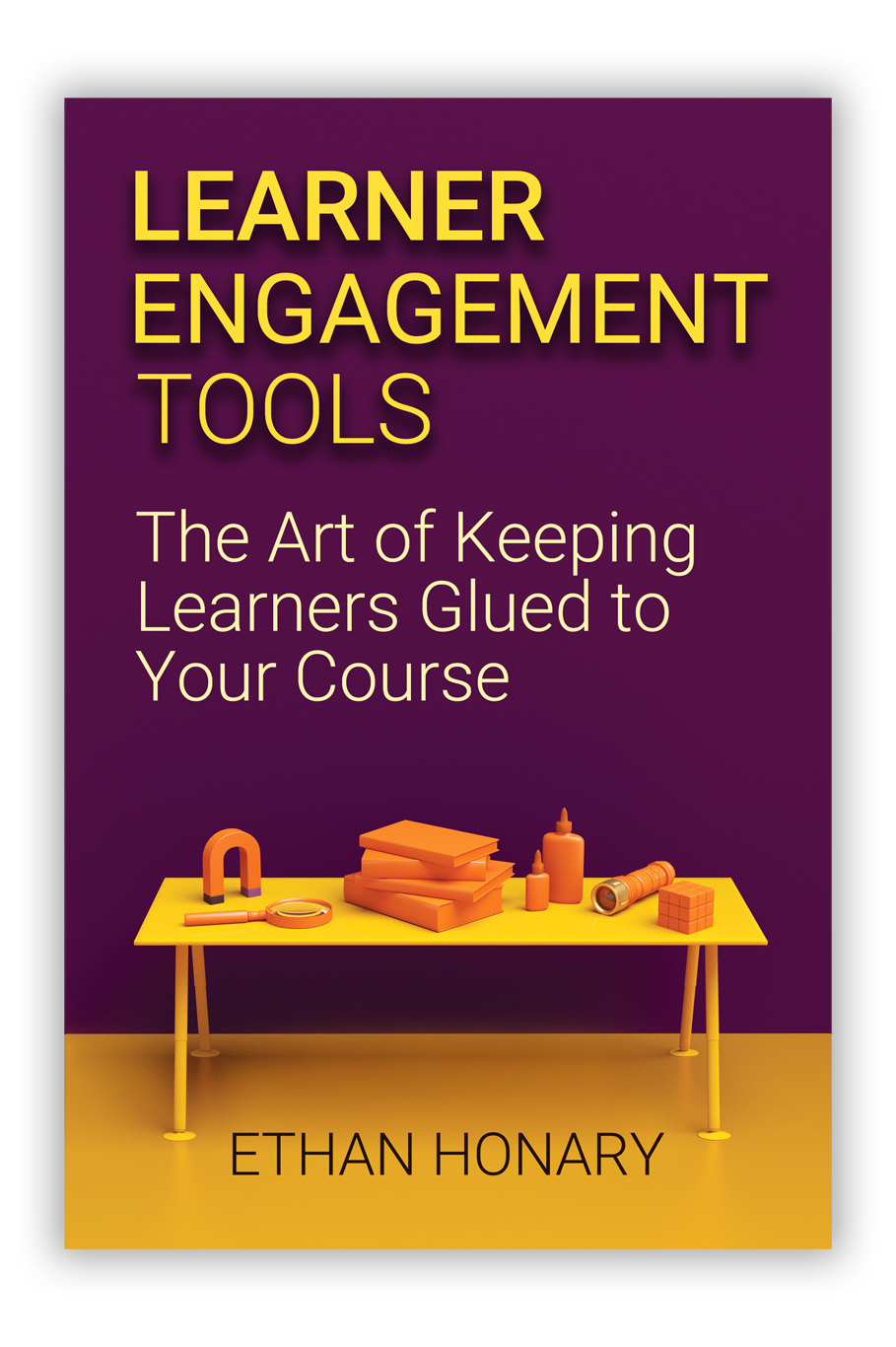
My most recent book, Learner Engagement Tools, was published in 2026. It brings together 32 practical tools for designing engagement into a course, drawing on principles such as curiosity, storytelling, appropriate challenge and learner control to capture attention, sustain motivation and respond effectively when engagement begins to fall.

Dr Ethan (Ehsan) Honary
You can connect to Ethan Honary and follow him on LinkedIn:
Get Coached on Becoming the Best Trainer You Can Be