




Questioning Skills Training Materials
Offering extensive examples and optional exercises, these fully editable questioning skills training materials support a one-day workshop that can be extended for longer delivery. Participants learn to formulate purposeful questions for coaching, information gathering, rapport, motivation, group discussions and selling while recognising manipulative questions and avoiding approaches that restrict productive conversation.
Format: Fully Editable Word & PowerPoint
Delivery: Instant Download & Ready to Use
Licence: Reusable for Unlimited Workshops
Trainer Friendly: Comprehensive Trainer Notes
Trusted Worldwide
Skills Converged customers include the NHS, Adidas, the BBC, BMW and Etihad Airways and many universities. Our training materials are used in more than 100 countries.
Course Level: Beginner Intermediate
Category: Interpersonal Development

Key Topics Covered in the Questioning Skills Course
What Participants Will Learn
By the end of this course participants will be able to:
What Is Included
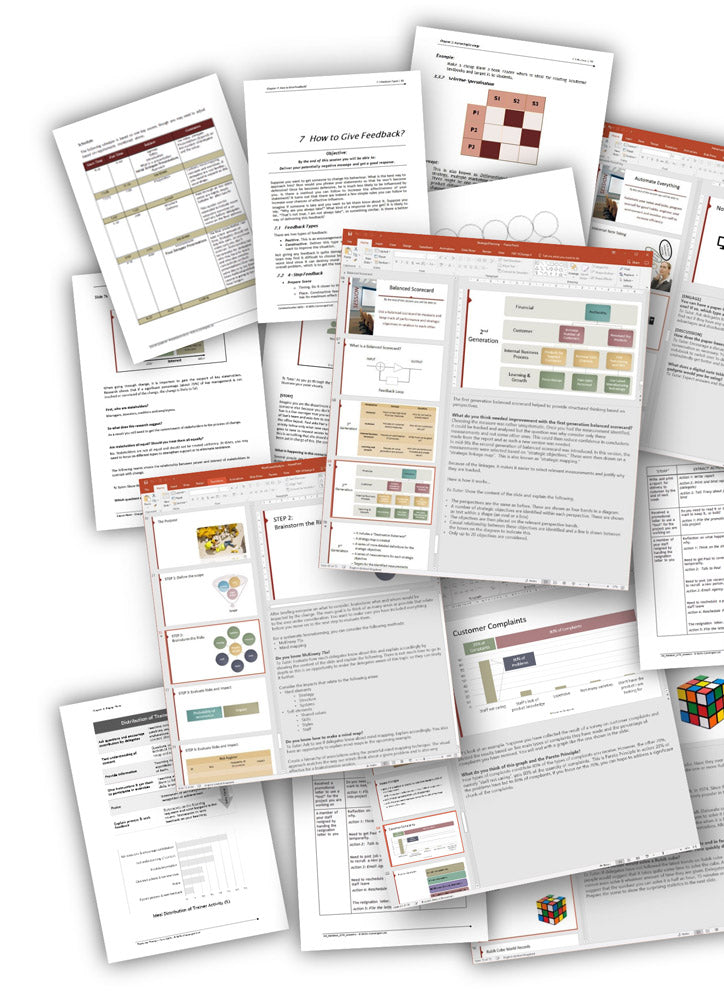
Everything you need to run the course:
- Slides
- Trainer Notes
- Workbook
- Exercises
- Handouts
- Specific Course Guidelines
- Agenda and Course Outline
- Training Methodology Guidelines
- Feedback Forms
- Certificate of Achievement
- Recommended Readings
Bonus ebook included: How to Increase the Impact of Exercises and Get the Best Results
Fully Customisable Training Course Material
Detailed Syllabus for the Questioning Skills Course
During the course of many conversations we end up asking some questions. We ask questions for a variety of reasons; we may want to obtain more information, show that we are following the other person, or sometimes we may want to challenge them. Whatever the need, knowing what to ask and how to ask is a critical skill within communication that if mastered can pay huge dividends.
The best way to learn about different styles of questions is through examples. In this course all questions types are defined followed by examples so delegates can clearly see how they work in practice. Numerous real world conversations are also provided to demonstrate clearly how an exchange containing specific questions would work in practice. Bad questions are also explored which help the delegates to see their effect on a conversation and how these questions could change the way others look at them after asking such questions.
Being good at questioning others also indirectly helps you to become better at answering them by understanding the motive behind each question type. This is particularly applicable to manipulative questions which are also covered in this course in addition to good strategies for responding to them.
This course contains a series of optional exercises which you can incorporate in your course. These can easily extend the course to 1.5 days. Some of these exercises contain variations which allow you to customise them based on your delegates’ specific needs and background.
This course is also useful for managers or people new to management roles who usually need to ask lots of questions as part of their daily roles. The session on asking questions from a group is in particular useful for managers addressing a team or asking questions in a meeting.
In this highly practical course delegates will learn:
Questioning Strategies
- What are the benefits of asking questions?
- What do we want when we ask questions?
- What strategies help you to get the most from your questions?
- What are positive and negative questions and what are the implications of asking each type?
Coaching Questions
- What is the best way to ask questions from people you may wish to coach?
- What types of probing questions can you ask to better understand the other person’s needs?
- How to empower people
- What are bad coaching questions and how to avoid them?
Information Questions
- What is the most effective way to get as much information as possible with the smallest number of questions?
- How can you systematically ask a series of questions to guide a conversation towards a topic of your choice?
Establishing Rapport
- How to ask empathic questions
- How to make the other person feel more comfortable and trusting
- How to use a simple yet powerful questioning technique to encourage the other person talk and reveal more about themselves and their inner thoughts
Motivational and Engaging Questions
- How to ask questions to inspire others
- How to ask questions to seek agreement
- How to ask a series of questions while simultaneously giving information? What is the benefit of this approach
Group Questions
- How to ask questions from a group of people
- What issues can you expect when asking questions from a group and how to address them?
Manipulative Questions
- What are manipulative questions and why should you be aware of them?
- What are examples of such manipulative questions and how should you respond to them?
- How to answer a question with a question of your own
Selling Questions
- What questions are effective when you want to sell an idea, product or service to others?
“One who asks a question is a fool for five minutes;
one who does not ask a question remains a fool forever.”Chinese Proverb
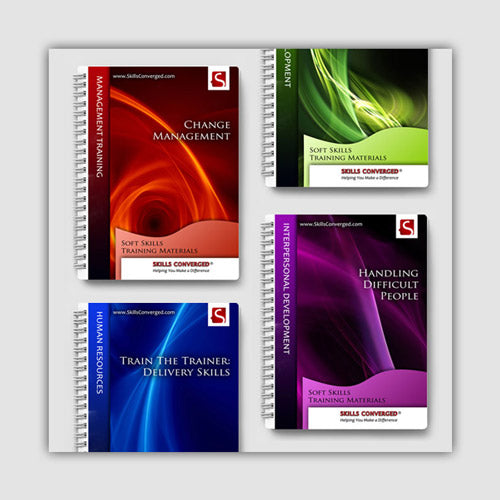
Multi-Course Pricing Discount
10% OFF when you purchase 2 or more training materials packs.
20% OFF when you purchase 3 or more training materials packs.
30% OFF when you purchase 10 or more training materials packs.
Courseware Features
Buy & Download Instantly
- Add this course to your basket and pay securely using a debit or credit card, PayPal, Apple Pay or Google Pay.
- After payment, you will be taken immediately to the download page. We will also email your download link.
- Download and unzip the package to access the editable Word and PowerPoint training resources.
Buying several courses? Multi-course discounts are applied automatically in your basket.
Payment, Downloads and DiscountsCustomise the content, add your branding and combine it with your own materials. Supplied in editable DOCX and PPTX formats
Reprint participant workbooks as often as required.
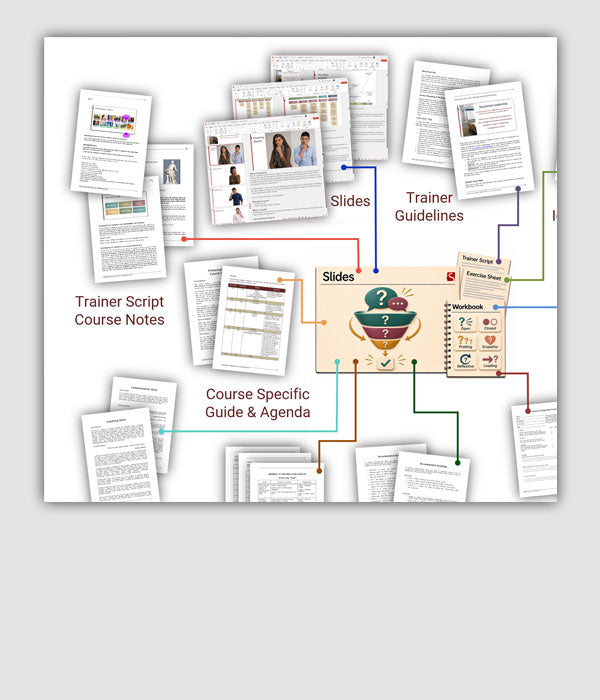
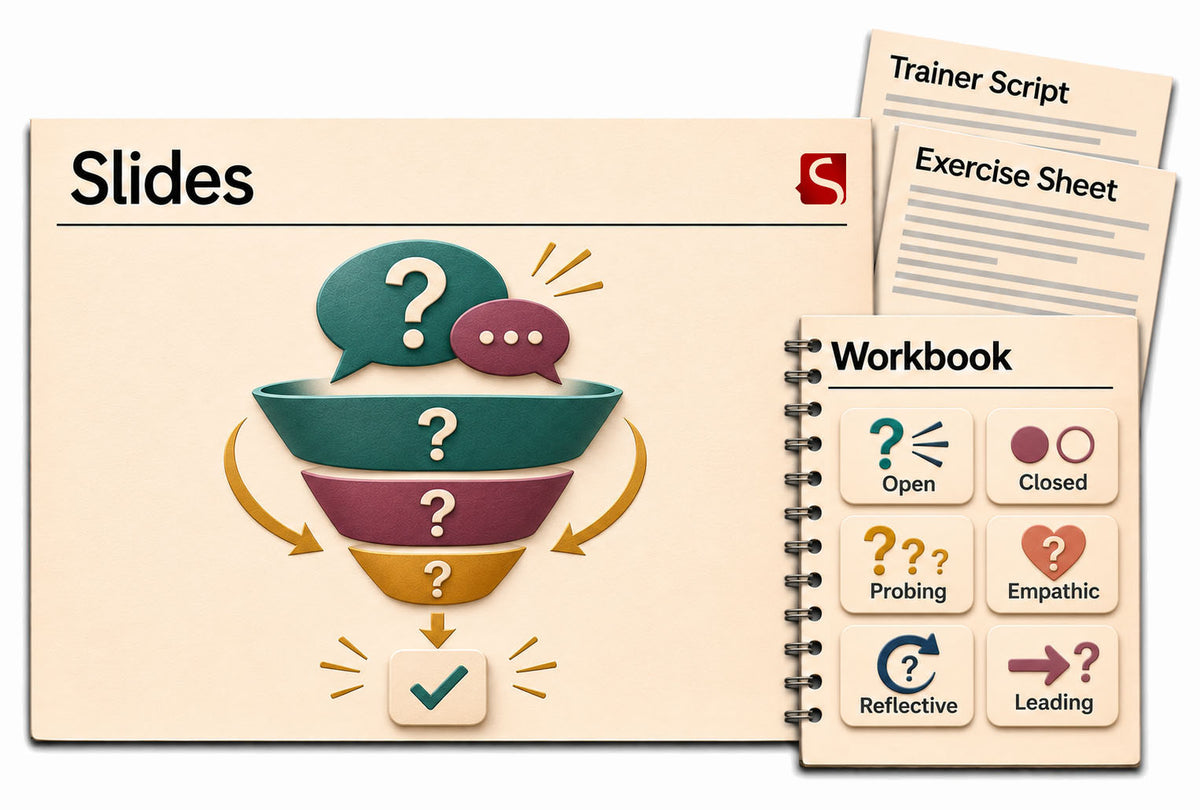
A coordinated collection of trainer and participant resources that include slides, trainer notes, workbook, exercises and supporting documents such as printable certificates and feedback forms.
Content and design informed by educational psychology, behavioural science and business practice.
Includes detailed guidance to help you prepare and deliver the course confidently. We specialise in training trainers, so our course materials are designed around methods that work in real-world training delivery.
Examples, case studies and exercises support practice, engagement and long-term retention.
About the Design Philosophy of Questioning Skills Course
Used by Trainers in
100+ Countries
Our Training Materials Are Used Worldwide
View a selection of our customers
Read customer testimonials





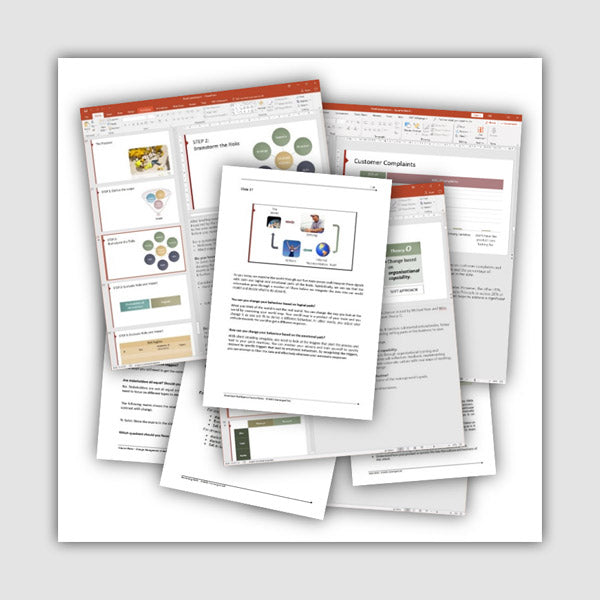
Preview a Complete Sample Course
See an example pack containing slides, trainer notes, a workbook, exercises and handouts.

Train the Trainer Resources
Improve course design and delivery with practical guides, specialist books and Train the Trainer courses.

Frequently Asked Questions
Find answers about editing, licensing, payments, downloads and technical requirements.
For Trainers and Training Providers
Expand your course portfolio, adapt editable materials to each audience and prepare professional training in less time
For L&D and HR Teams
Give internal facilitators consistent, professionally designed courseware that can be customised to your organisation and reused across teams