

The House of Ropes Team Building Exercise
This fun team building activity focuses on engaging team members in a creative and problem-solving environment, emphasising effective communication and planning. Teams will work together to create ...

Icebreakers for Online and Virtual Training Courses
In today’s digital era, where virtual meetings and training sessions have become the norm, the role of icebreakers has never been more critical. These activities are the cornerstone of any successf...

Prisoner’s Dilemma Exercise: The Trust Game
This exercise is designed to help participants understand the dynamics of cooperation and competition, trust, and decision-making under uncertainty, reflecting the principles of the Prisoner's Dile...

The Strangest Secret: Progressive Realisation of a Worthy Ideal
Earl Nightingale, a renowned self-help author, speaker, and radio personality, left a profound impact on the field of personal development and success. His teachings have inspired millions worldwid...

Powerful Strategic Planning Exercises to Include in Your Courses
Strategic planning exercises help to re-energise your team and set them on the path of growth. It can inspire teams in any business, boost energy and moral and give a sense of direction to where th...

The Empathy Expedition: Leadership and Change Management Game
The Empathy Expedition is a dynamic and game-like roleplay exercise designed to develop emotional intelligence, leadership, and change management skills in an engaging and entertaining way. Partici...

Acting and Improvisation Exercises
Practicing improvisation exercises can greatly help with communication skills and help reduce fear of being on stage. In a controlled environment of a class, you can easily get delegates to practic...

How to Avoid Bad Training Exercises
Many trainers are always in search of the next best exercise for their courses. On this site alone we have hundreds of exercises that you could choose from. You may even decide to design your own; ...

It is easy to think that a different life would have been easier or better. It is easy to think that somebody else’s life is vastly better than yours and to fantasise being in someone else’s positi...

Agile vs. Traditional Task Management Exercise
This is a useful exercise in demonstrating the difference between Agile and traditional development environments such as waterfall. It can also help explore concepts such as silo mentality, where e...
Productivity Exercise: Multitasking Can Undermine Performance
These days, we want to multitask everything and all at once. Sometimes, when the work is routine, multitasking improves performance; for example, when you are cooking something you already know. Mo...

The advent of “Fake News” means that we are currently going through a major phase in history. Fake news has come to dominate the news, literally. It is sometimes amusing, but most often frightening...

What Does This Picture Say About Your Company
This is a powerful exercise that can help managers to understand what their team thinks of the organisation's structure. Such structures are used by companies in order to communicate their vision w...
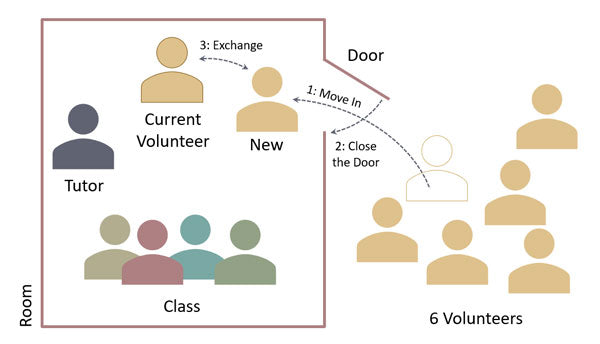
A Variation of Chinese Whisper Listening Exercise
This is an interesting variation of the infamous Chinese Whisper exercise. In this variation, some volunteers leave the room and then be brought back in, rather than just whispering a sentence in t...
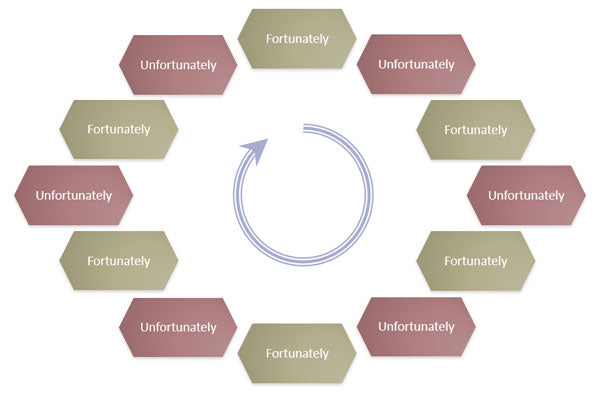
This classic game was popularised in 80s. It is fun to play and helps to generate a lot of positives and negatives for a given topic. Delegates go through a series of statements that start with ‘fo...
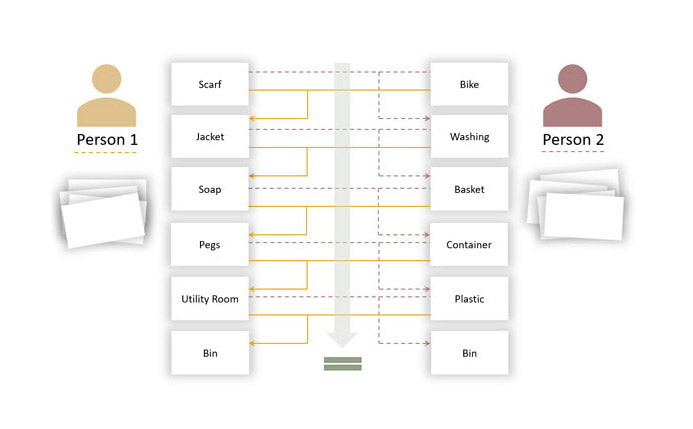
This is a fun exercise focusing on word play where the delegates need to converge on a common word based on previously suggested words. When convergence happens, it is immensely enjoyable. The pair...

Change Management: Reorganised Wallet-Purse
This is a powerful exercise that demonstrates why change should not be imposed. The likelihood of resistance is much higher when people are not consulted on change. This is why they should be invol...
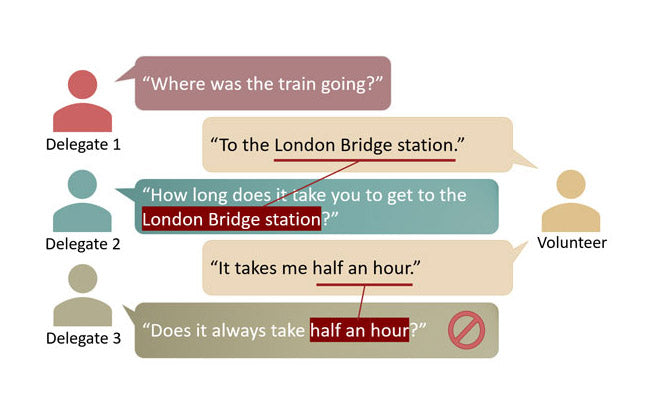
Active Listening Skills Roleplay
This is a highly educational and entertaining exercise on asking open questions. Open questions lead to more information while closed questions lead to a yes/no answer. Open questions are usually m...