


Purpose
Psychologists have suggested a direct link between the way you recall an event and the way you are questioned about it. The structure of the questions and the wordings are critical. Numerous studies on eyewitness recalls show that witnesses remember differently depending on how they are asked. In this exercise, delegates will get a hands-on experience of differences created as a result of asking different questions. This will encourage them to pay more attention to the way they ask questions and thereby improve their communication skills.
Objective
Fill the questionnaire by recalling a past event and then compare the recall with other delegates.
What You Need
- Several copies of the handouts provided below. You will need one of each for half the group.
Pre-Course Preparation
- Before the session, ask your colleague to help you with this exercise. Set a time for your colleague to come and interrupt your session. Choose a suitable time so that you are not in the middle of an exercise or a critical part of the course.
- Ask your colleague to casually interrupt the session by offering to sort out tea, coffee or biscuits in the training room.
Setup
During The Talk
- Carry on with your training until interrupted by your colleague.
- The conversation may go like this:
Your colleague: [knocking on the door…] You: “Come in please” Your colleague: “I am just going to sort out your drinks and bring hot water” You: “Sure, feel free” Your colleague: [proceeds with the task…] Your colleague: [once done…] “Sorry for the interruption. That’s all done now. Let me know if you need anything else.” You: “Thanks Jane, that’s great. Cheers.” Resume your course naturally after the interruption.
The Exercise, Sometime Later
- When you get to this exercise, distribute the two types of handouts randomly to the delegates and ask them to fill them in.
- Explain that any sort of communication including non-verbal communication is banned during this exercise.
- There are two types of questions and delegates are likely to answer differently to these questions.
- When they have completed their answers, go through one question at a time and get them to read their answers. Observe and explain variations of answers and follow with a discussion.
Timing
Explaining the Test: 5 minutes.
Activity: 10 minutes
Group Feedback: 15 minutes.
Discussion
Delegates are usually quite surprised with this exercise and its implications. They also realise that the interruption was a setup, which becomes amusing (and they will probably take another real interruption as a fake!).
Initiate a discussion with a report on the psychological research that shows the wording of sentences can affect the outcome considerably. For example, the answer you may get from “How fast was it moving?” can be different from “How slow was it moving?” which can mislead or confuse.
Background
In an eye-opening research (Taleb 2008) an experiment was carried out to study the effect of asking questions before getting an answer from people. The researchers setup a survey in public. At first, people were asked for the last 4 digits of their social security number (the research was carried out in the USA). Then they proceeded to ask the main questions. There were many variations. For example, following the initial question, they asked, “How many people do you think live in this city?”, or, “How many dentist do you think are in San Francisco?” and so on. Interestingly the researchers found a correlation between the original social security number and the subsequent answer for the size of the population! This research clearly shows the importance of wording questions as well as priming and the warm-up before answers are expected.
If in a leading position, it is important to pay attention to the way you phrase your questions and the answers you receive as a result. Be aware of the wordings of questions asked in meetings as they can make a huge difference in the meaning of the question and how it is received by others. In a meeting, you must pay attention to the way a person may ask a question from another. It can easily lead to a long wasteful discussion if the wording of the question has been wrong and the person who wanted to answer, took it in a different way. If you are a manger of such a team, keep an eye on questions and in general verbal communication in your team and correct the misunderstanding as quickly as possible to save time and focus the discussion on critical topics instead.
Questionnaire 1
Q1. How tall was the person who interrupted?
Q2. How short was the hair?
Q3. How fast was the person moving?
Q4. How casual was the person’s cloth?
Q5. Was the person wearing glasses?
Questionnaire 2
Q1. How short was the person who interrupted?
Q2. How long was the hair?
Q3. How slow was the person moving?
Q4. How formal was the person’s cloth?
Q5. Was the person wearing contact lenses?
References
Taleb, N.N., (2008) “Black Swan”, Penguin, ISBN: 978-0141034591.

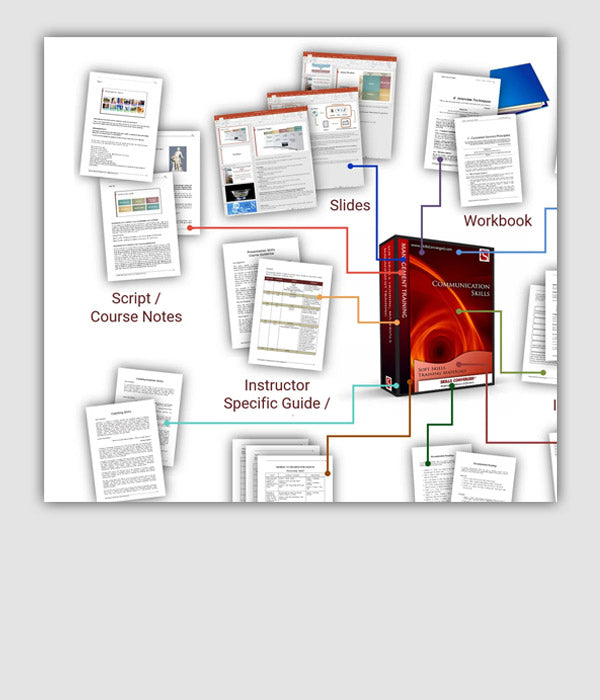
Soft Skills Training Materials
Get downloadable training materials

Online Train the Trainer Course:
Core Skills
Learn How to Become the Best Trainer in Your Field
All Tags
The Most Similar Exercises & Articles to this in Order of Similarity Are:

Training Resources for You
Course Design Strategy
Available as paperback and ebook

Free Training Resources
Download a free comprehensive training package including training guidelines, soft skills training activities, assessment forms and useful training resources that you can use to enhance your courses.

Our Comprehensive Guide to Body Language

Train the Trainer Resources
Get Insights - Read Guides and Books - Attend Courses
Training Materials
Get downloadable training materials on: Management Training, Personal Development, Interpersonal Development, Human Resources, and Sales & Marketing
Leave a comment
All comments are moderated before being published.
This site is protected by reCAPTCHA and the Google Privacy Policy and Terms of Service apply.